
‘Is Socialism Possible in Britain? Reflections on the Corbyn Years’ Verso 2022 £14.99 reviewed by Larry O’Hara (published in Labour Briefing April 2023)
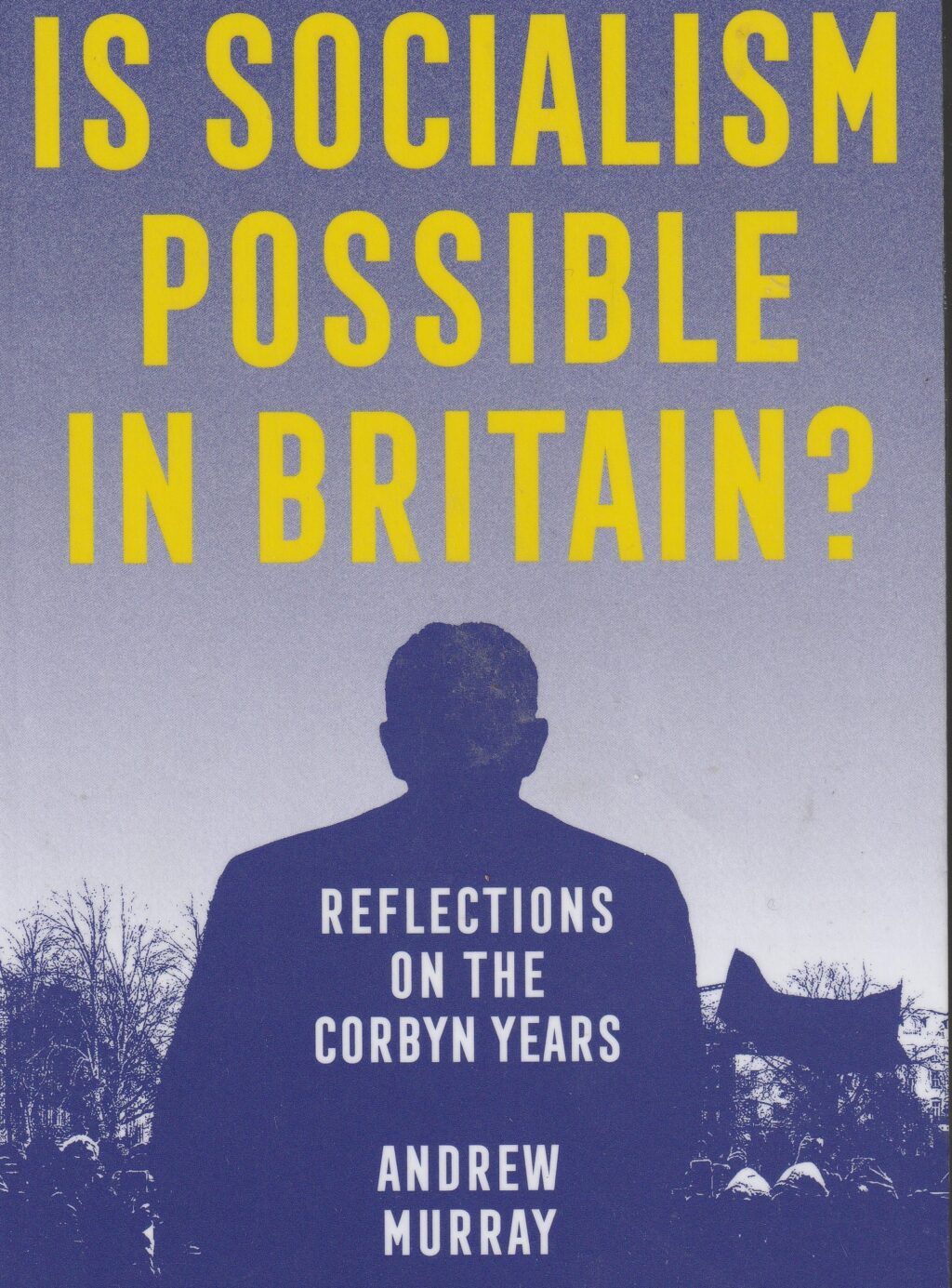
This book, from UNITE trade union official/key Corbyn adviser Andrew Murray is the most important offering yet concerning the ‘Corbyn Experiment’ between 2015-19. Not least because Murray was in the room when most strategic decisions were taken: or not.
While some parts are necessarily compressed (e.g. Labour history) Murray’s historical perspective is invaluable: contrasting the 1980’s Bennite Left strengths (p.22-3) with Left weakness in 2015/today (p.201-5). Murray peppers the book (and Appendix) with his own contemporary strategic insights, and while many were not taken up: e.g. how to deal with anti-Semitism and Brexit to name but two, things would have turned out better had they been.
Of necessity, given the Starmer/Labour Right mission is to erase this period from history, Murray reminds us of important facts: how the 2017 result was comparatively good, not forgetting Corbyn’s articulation after the Manchester Arena bombing of connections between Britain’s overseas militarism and Islamist atrocities here (p.63). Indeed, even the 2019 result was not as bad as it has been painted, despite manifold campaign mistakes (p.181-87).
Some asides are very revealing. Such as the claim (new to me) that Jeremy Corbyn’s initial Leadership campaign economic pitch was urgently drafted by Murray and John Rees/Lindsey German (Stop the War/Counterfire) on a pub napkin during a walking holiday (p.44). Equally telling was the admission that when it came to internal party matters concerning the apparatus Steve Howell (Target Seats Director) “and I would frequently laugh that we had absolutely no idea, nor way of finding out, whether what had just been agreed in a meeting would be actually implemented” (p.72). If true of Labour internally (and the leaked evidence of sabotage confirms for me their fears), then had Labour been elected they certainly wouldn’t have outflanked civil service opposition. Murray later admits the Corbyn Project anticipated little resistance from the state, and did not consider popular power at all as a corrective (p.225), rightly emphasising a lack of strategic planning generally (p.75). Yet is Murray himself not partly responsible here?
While unaccountably charitable to books by Gabriel Pogrund and Patrick Maguire, and Owen Jones (p.2/3), especially concerning anti-Semitism–in my view the key problem with both texts–Murray delivers a balanced account (p.115-33/169-71). He is also generous regarding key apparatchiks Ian McNicholl/Patrick Heneghan, thinking it “unlikely” they wanted Labour to lose in 2017 when diverting funds illicitly to anti-Corbyn MPs (p.74). I am not so sure. On the other hand, he is rightly coruscating not just about spooks undermining Corbyn (p.103-8) but also the BBC, Guardian & New Statesman (p.108-114). Even more, he rightly calls out the current Parliamentary Labour Party as a privileged caste, hostile to socialism (p.80-88/223). Yet paradoxically Murray does not favour a long-term Labour Left aim: mandatory reselection of MPs (p.89-91), but asks “why should the NEC, representing the whole party, not direct the work of Labour MPs—not perhaps on every detail, but on the main matters of policy?” (p.92). To which the quick answer is, if the PLP Augean Stables are not cleaned out (by mandatory reselection) the NEC will not just be challenged by MPs, but demonised by them/the media/opponents as in the past, only more so.
Murray rightly emphasises the importance of Brexit policy undermining Corbyn’s chances, not least because of John McDonnell’s apparent conversion to a second Referendum. Murray thinks Labour had the chance in 2017 to help secure Brexit, thereby respecting the Referendum result and shoring up Leave-voting heartlands. I concur, but even for those who don’t, it is hard to disagree with Murray that regarding Labour’s 2019 policy of negotiating a new deal most of the leadership would then themselves vote against “it is doubtful if any major party has offered the British people a more preposterous policy on a great issue of public concern at a general election” (p.179). While hostile to Starmer, Murray’s alternative is a little vague: a seeming reconstitution of the working class from such movements as CND, Extinction Rebellion, Black Lives Matter and revived trade unions (p.215). Necessary but not sufficient.
About The Author
