I was a member of revolutionary socialist organisation Big Flame in Coventry, Liverpool & London between 1979 and its demise (absorption into the Socialist Federation) in 1985. I contributed a series of articles to the party paper (and internal Discussion Bulletin) on Labour Left strategy and how Big Flame should relate to it. These included the Big Flame newspaper editorial following the 1982 Falklands War. My take is I never left Big Flame, but (by dissolving) they left me instead. Perhaps unusually, age has not diluted my commitment to revolutionary socialism, rather broadened and deepened it I hope, not least by incorporating a Green element to such a perspective. While having disagreements with the document below: to be articulated at greater length elsewhere, it is nonetheless in my opinion the most substantial and original document on revolutionary strategy in Britain I have ever read and large parts are still relevant today. It appeared in the internal Big Flame—hereafter mostly BF–Discussion Bulletin but nowhere else to my knowledge. Which is why we reproduce it here: as part of the long term Notes From the Borderland project advancing the Leftist cause in an ideological Gramscian ‘war of position’ sense. We positively welcome comments (including polite but critical ones) on both the original article and this schematic outline of how it is relevant today. Email us at nfbmagazine@yahoo.co.uk and we will get back to you. Another thought to ponder: it has been suggested that it might be useful for those interested to quickly scroll down past this introduction and read the article first, before returning to this introduction. While not entirely convinced, certainly an option. You decide. But certainly think it is important to read both, whatever order you do it in…
WHO WERE BIG FLAME?
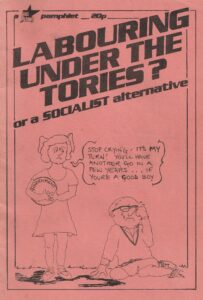
This small group, founded in Liverpool 1971, never numbering above 200, certainly punched politically way above its numerical weight. They sought to advance struggles and build connections in a non-sectarian way by producing high-quality publications (yes, people still read off-line in those distant days: print this article out and try it…). There were two publication spurts (the newspaper aside). First was the Big Flame journal, succeeded by Revolutionary Socialism, both consistently high quality (though you might expect me to say that..). There were also one off pamphlets: ‘Ireland: Rising in the North’ (1975) and following the 1974 Revolution ‘Portugal: A Blaze of Freedom’ (1975) and most importantly ‘Chile Si!’ in 1975, covering the Allende Government there between 1970-73, which ended in a blood-bath/military dictatorship. Some arguments in that pamphlet reappear in the text below. Two other important 1970’s BF publications were ‘Towards A New Revolutionary Socialist Organisation’ (March 1977) sketching out BF’s contemporary analysis of society and where this left the Far Left. 1977 also saw ‘The Revolution Unfinished? A Critique of Trotskyism’, which brought forth an expected but interesting response from thinking Trotskyists the International Marxist Group (hereafter IMG) [1]. There was also a rather anodyne 1979 offering ‘Labouring Under The Tories: Or a Socialist Alternative’. BF had numerous Commissions: Anti-Racist/ Women’s/Industrial/Irish/Teachers/Anti-Nuclear for a start. All Commissions produced what are still even today fascinating publications: references in footnote[2]. Furthermore, despite having a newspaper (predictably called Big Flame as stated) local groups had a fair degree of autonomy, although there was also a National Committee. Which as you might expect created a certain tension, not always creative…While rejecting traditional Leninism (and Trotskyism) BF remained revolutionary socialist and non-sectarian, willing to work with others and certainly not parachuting into struggles just to recruit members, like other Far Left groups. Which meant lots of people liked BF, but enough never joined!
DIFFERING INTERNAL PERSPECTIVES
Being resolutely non-sectarian, there was a tradition of full and frank internal discussion, mostly played out in the often lengthy Discussion Bulletins. I read them all after I joined, though suspect they were a bit much for many members! BF contained three distinctive elements which by the late 1970’s had crystallised into factions:
First the numerically dominant autonomist-influenced section, very focussed on building grass-roots struggles in a non-sectarian way, and distrustful of anything that seemed an accommodation to Labour/reformism generally. Thus, they certainly weren’t in favour of voting Labour.
Second faction might be called now (they weren’t then!) the strategic faction. To explain. Nobody would disagree that BF was strongly-influenced by Italian Far Left groups Avanguardia Operaia and Lotta Continua. These organisations were certainly not Leninist in the classical sense, but retained a commitment to revolution. Key here was an influential 1968 article by Adriano Sofri ‘Organising For Workers Power’ [3]. He articulated the idea that instead of one (Leninist) vanguard party directing struggle, including insurrection when the time is right, instead the focus should be on building and recruiting internal vanguards within each sector of struggle who at an optimal point may (not necessarily will) coalesce to form a revolutionary party capable of seizing power. This, of course, is the implicit theoretical basis for Big Flame’s Commission structure.
Given the above, ‘Seizing The Power’ (hereafter mostly STP) seeks to address what is/was undoubtedly a gap in the purist autonomist perspective: how exactly might revolution be made in modern times? As STP points out (p.17) BF had till then implicitly adhered to a ‘big bang’ theory of revolution without exploring such in detail. By default this meant accepting the perceived Leninist template. Strategic thinking was not, in my opinion, a strong point of the dominant autonomist faction, hence the article was not uniformly acclaimed. For instance, in the opinion of Toni Negri, key Italian autonomist theorist–whom BF members under the Red Notes banner rightly supported when he was framed on specious terrorism charges (see BLINDED BY THE LIGHT? POLITICAL TERRORISM IN ITALY)–“far from being defeated, the revolutions of the twentieth century have each pushed forward and transformed the terms of class conflict, posing the conditions of a new political subjectivity, an insurgent multitude against imperial power. The rhythm that the revolutionary movements have established is the beat of a new aetas, a new maturity and metamorphosis of the times” [4]. Putting it politely, this is moonshine, a construct so diffuse as to be evanescent. That the authors of ‘Seizing The Power’ a couple of years later joined the Labour Party (a course of action which they here reject) does not negate the important questions they raise [5], nor should Geoff Hodgson’s drift to an anti-socialist position do so either. Those in favour of the approach advocated by Duncan/McKenzie–hereafter mostly D/M–(the two monikers placed together denote the name of a 1970’s Everton FC flair player loved by us fans but despised and disposed of by manager Gordon Lee) were in a definite minority, and I surmise (but hope it is not so) the perspective below will not be prominent in the forthcoming book to be published by Merlin Press in November 2024 on the organisation. Max Farrar, a long-time BF stalwart from Leeds, is involved with the book and in 2011 mentioned his own involvement in the only substantial previous mention of BF, the National Committee sanctioned 1981 Socialist Register article by John Howell ‘Big Flame: Resituating Socialist Strategy & Organisation’ [6]. Another positive development: in March 2024 the Salford-based working-class movement library received a £100,000 National Lottery grant to digitise and publicise their Big Flame archive [7].
Thirdmicroscopic faction I joined (my party name was Micky Mouse) the Emerald Street Groupfavoured combining both points of view. Once the strategic faction decamped to Labour, debate ended, BF entering a death-spiral.
I would not though want you to leave this brief (and partisan!) summary with the impression BF were just a bunch of dilettantes/flakes. Members did great work in some very difficult areas: notably Anti-Fascism and Irish solidarity, especially the Troops Out Movement. In the latter they encountered cop infiltrator Rick Clarke (aka Richard Gibson), designated HN 297 in the ongoing Undercover Policing Inquiry. According to a core participant Closing Statement in February 2023 “He only stopped because his activity was discovered; Big Flame activists confronted him with his birth and death certificates. The outing of Richard Clark was so significant for the SDS that it went down in SDS folklore and was used as a cautionary tale for decades” [8]. This took place in 1976 and refers to the method of acquiring a false identity first publicised in Frederick Forsyth’s ‘Day of the Jackal’, still used by other cops thereafter nonetheless. It was not IS/SWP IMG or others who sussed him out: but Big Flame. Fancy that as HS would say…
WHY ‘SEIZING THE POWER’ IS IMPORTANT
It was written in the last days of the 1974-79 Labour government, which went on to lose the May 1979 General Election to the Conservatives then led by Margaret Thatcher, ushering in 18 long years of Tory rule. Beneath the surface however, the Labour Party Left was flexing its muscles, and had since the early 1970s made the running in terms of party policy, most notably in developing what was known as the ‘Alternative Economic Strategy’ (AES) [9]. None of those policies made it into the 1979 Labour manifesto, leading to a furious backlash from a resurgent Left, whose Tribune was the undoubtedly charismatic Tony Benn. I can still recall from memory (not You-Tube!) his electrifying address to Labour Conference in late 1979, listing with brio all the policies excluded, in his repeated resonant phrase ‘ruled out’. In October 1981 Benn stood for the Deputy Leadership, and would have won but for some MPs on the Labour Right (who shortly thereafter left to form the ‘Social Democratic Party’) staying long enough to vote against him under the then prevailing Electoral College rules. Subsequently, important elements of the AES were incorporated into Labour’s ‘Programme 1982’ and 1983 Manifesto, though poorly argued for. The significance of this backdrop is while the Labour Left as a whole are barely mentioned below, Geoff Hodgson (designated by Duncan/McKenzie–hereafter mostly D/M–as ‘Comrade’: an appellation denied others like the far more worthy Ernest Mandel) was at this time definitely on the Labour Left. Thus, D/M believed there was a growing potential audience for their perspective inside Labour.
What makes this obscure text, which would certainly today be repudiated by its authors, significant? A few things:
Coursing throughout is a revolutionary perspective, the passion of which is undeniable. While containing jargon (it was an internal document after all), there is a refreshingly iconoclastic attitude.
Lenin is copiously quoted, but in the context of a searing critique of the universal applicability of the (imagined) Russia 1917 model of revolution. For the Far Left, an intellectual and political breakthrough of immense proportions, as it frees revolutionaries to think about the actual society we live in.
Excessive myopic focus on the lack of a vanguard party as the catch-all explanation for political reversals is banished. The argument is that such party/parties may/will only arise if/when the social conditions for such are present. Use of the plural parties is no mistake, but indicates a genuinely non-sectarian approach.
There is serious consideration of the events of May 1968 in France from a revolutionary perspective. While the authors (broadly correct in my view) believe this was no revolutionary/pre-revolutionary situation they were right to analyse it, not only in the sense of confirming timeless lessons (like the rest of the Far Left did) but as something we can actually learn from. In particular that (unlike in Russia 1917) reformist parties/institutions were/are just too strong to be ignored.
The Allende Government in Chile 1970-73 was the only attempt to date (as of January 1979) to embark on a parliamentary road to socialism, and as such they were indeed justified in exploring this, not just in the sense of old lessons learnt (the need to confront/split the armed forces) but in terms of the potentially positive effect a Left Government could have on struggles from below. As they put it “the development of this mass revolutionary movement was made possible by one factor: the election and development of a left-wing reformist government…the mass development took place not because the government consciously led it; but because the government, irrespective of its own wishes, provided a context inside which the masses could or needed to find a revolutionary mobilisation” (Page 8 below).
An important clarification to avoid confusion–a Left Government in the sense D/M (and myself) use the description “is a government in conditions of bourgeois democracy, made up of reformist party/s of the Left. It does not include simply social-democratic governments like the existing Labour one, and it also has to be distinguished from the possibility of a revolutionary government in conditions of the dictatorship of the proletariat” (Page 18).
Though only mentioned in passing, D/M importantly state “the notion of class alliances in future must take into account the reduced (not ended) centrality of the industrial working class and the corresponding growth in importance of the autonomous and popular movements (including ecological and so on). This in itself indicates that alliances in future will be mediated more through movements (reaching across classes in a progressive way) than simply by programmes” (Page 18).
While I disagree with their emphasis, D/M were absolutely right to highlight the contribution of Geoff Hodgson to the debate about socialism and parliamentary democracy, in that parliament cannot be ignored, even though it must eventually be transcended.
They are also aware, even if they do not greatly develop (hardly a criticism given the article was already lengthy) of contemporary contributions to debate by Nicos Poulantzas and Daniel Bensaid.
Like Big Flame as a whole, D/M were keen to assess revolutionary prospects in relation to changes in class composition and society generally—while you might think this axiomatic, something sadly beyond most Far Left groups then as now.
WHERE I DIFFER FROM THIS PERSPECTIVE
Having heaped what is for me uncharacteristic praise on the authors, and while this is no place for a lengthy critique, a few points of dissension leap out.
ANTONIO GRAMSCI
They are rather unfair to Ernest Mandel, key theoretician of the (Trotskyist) Fourth International. In the very New Left Review 100 article they encourage others to read, Mandel provides a far more nuanced view of revolution and how the Far Left should relate to a Left Government, than D/M present by quoting an earlier Mandel pamphlet [10].
Strangely, for comrades so influenced by Italian developments D/M do not make use of Italian Marxist Antonio Gramsci’s insights into both the Russian Revolution and by extension revolution in the West [11]. On which subject Perry Anderson, also in New Left Review 100, is most interesting.
The Lenin text D/M cite is certainly not one of his better tracts, indeed they are far too soft on Lenin: there is a whole subterranean corpus of an alternative take on the Russian Revolution and Lenin that still deserves an audience: see footnote[12]. It is of course very understandable as to why they should quote Lenin: to make a post-Leninist message more palatable to the intended audience. Today, the time for such caution has long passed.
They are far too charitable to Hodgson, talking up his revolutionary credentials even while later effectively demolishing them. Which raises slight doubts as to what they really thought of him.
Set against the numerous insights on every page, these criticisms are minor: and as the authors say, they were asking questions more than providing answers. That is for us.
IS IT RELEVANT TODAY?
Superficially, this article might appear supremely irrelevant. The Labour Party/Government is in the grip of a ruthless right-wing clique, who have expunged party democracy, expelled many Leftists on specious pretexts, and are currently in hock to the most rapacious capitalist forces (hedge funds) while fully intent on continuing austerity just under a different name: Securonomics. On which see for a start https://borderland.co.uk/the-starmer-reeves-project-a-view-from-the-left-by-larry-ohara-published-in-labour-briefing-august-september-2024/. So a Left Government is no possibility any time soon.
The organised Far Left today is so miniscule as to be virtually (but not quite) imperceptible, though both Counterfire and RS21 do good work, especially in the heart of the protests against IDF genocide in occupied Palestine. Their conceptions of revolutionary strategy will in turn be analysed here in due course. Sad to say, despite Counterfire/RS21 efforts, ‘class politics’ in a formal sense is not on any mainstream political agenda. Furthermore, the rise of ‘identity politics’—whether of ethnicity, nationality, gender or other factors—at the very least complicates any revolutionary strategy. Then there is the matter of changing class composition: whereby workers often now self-manage their own exploitation (Uber/Deliveroo/Evri etc.) and too there is the increasing impinging upon daily life of digital technology, whether via the internet generally or AI (Accelerated Idiocy) specifically.
However, all is not lost, by any means.
First, despite current paltry numbers, only the Far Left is in principle capable of knitting together multiple diverse strands and concerns, including but not limited to those of the working class, in such a way as to overthrow the capitalist order. For, however well-intentioned, Left reformists would not go that far, and to be fair nor should we realistically expect them to.
Second, parliament and civil society are nonetheless still as important as they were in 1979 when D/M argued they could not be ignored. Which means, like it or not, that a Left Government will be an essential precursor to a revolutionary situation, though in itself it would certainly not guarantee one.
Third, however unlikely this might sound now, it should never be forgotten the Corbyn Project came about due to many years of austerity. And let there be no misconception: continued austerity and plundering of the Commons is exactly what the Starmer/Reeves project will deliver. Morgan McSweeney (formerly Starmer’s Campaign Manager and now Downing Street Head of Strategy [13]) apparently conducted extensive focus group polling before Starmer became leader. This found a Labour Party with only 25% ‘ideologues’: comprised of 20% Leftists and 5% Blairites. There were also 10% identitarians (whatever that means), 25% instrumentalists (just wanting to win elections), and the remaining 40% were idealists “for whom politics was an expressive, emotional values-led exercise: on Brexit but also on austerity” [14]. While Starmer has reneged on every single one of 10 pledges he made to become leader, saliently he felt the need to make such promises. Which explains his success: in the aftermath of the 2019 electoral debacle: adding to the support of Blairites (5%) instrumentalists (25%) the crucial constituency of idealists—the 40% fooled by his campaign pledges. However this coalition is inherently fragile, for even assuming say half of the Leftists have departed voluntarily/been expelled, this still makes a potential fragile constituency of about 75% in total, should (when) things take a turn for the worse. Starmer (and McSweeney) know this, hence the harshness of their pre-emptive action against 7 Left MP’s who recently voted in favour of restoring benefits to parents with more than two children. It also explains their desire in any future Leadership contest to restrict those able to vote to MPs alone. Starmer and Reeves are fully aware that as continued austerity begins to further bite, and the far-right rise in an organisational sense (whether through Reform or some other post-riot vehicle), the Labour Left and Left generally may (not will) come again. Even as it stands it is the Left that still has the policy ideas: ranging from full-fledged nationalisation to the Green New Deal and local economic strategies.
Fourth, a fundamental lesson of the Corbyn era was party activists focussed far too much (though sadly not ruthlessly enough) on internal party affairs, and not enough on building a base outside in civil society. A point well made before the 2019 election by the ever-insightful Tom Blackburn [15]. It is on this terrain where an astute Far Left should (not necessarily will) come into their own, relating to nascent internal vanguards within struggles such as Extinction Rebellion and similar, as well as workers in struggle such as those taking on the Amazon behemoth. Whatever its shortcomings, the key Far Left role in the Stop The War Coalition is testament to what is possible.
Fifth, one important aspect of the article was the need/desire to learn from recent relevant upheavals with strategic implications. Since then, aside from the Corbyn era and its sabotage by the Labour Right and others [16], there have been few. The 1981 Mitterand government in France certainly started out with a Left programme, but very soon abandoned it without a fight. While Venezuela may (or may not) be relevant, the most apposite case is certainly Greece, covering the period of Syriza from formal organisation as a party in 2012, up to and including their short-lived 2015 government and confrontation with (then surrender to) the EU. While after 2015 the Tsipras Syriza regime was certainly not a Left Government, before then it indubitably was. A lot of pertinent themes here: party-movement relationship, the role of parliament, how to deal with opposition etc. Though it ended in abject defeat, important lessons can be and should be learnt, on which more later [17].
Sixth, and perhaps controversially, reflection on issues raised by STP must include our electoral system. Allende was elected in Chile only because the Presidency was decided on a first past the post electoral system: as in a horse-race winner takes all, just like Westminster Parliament constituency elections. Though D/M do not dwell on this fact (and favour Proportional Representation as it happens) under any form of PR there is virtually no chance of a Left Government, as any coalition would lead to a fatal dilution of policy. While this might offend those favouring equity in parliamentary representation, not my concern: rather I look at it considering what might be most useful from a revolutionary perspective. While hitherto it might have seemed an elementary truism that no far left candidate could ever get elected under the first past the post system, the frequent triumphs of George Galloway, and the seven anti-genocide MPs (including Jeremy Corbyn) victorious in the July 2024 General Election render that truism redundant. In a different way, the fact a reactionary party like Reform also came from nowhere to win seats also confirms the political situation is more fluid than it has ever been. Something the Starmer government will find out to their cost when the electoral blue pill effects wear off. And, like it or not, Farage and his acolytes use their numerically minor parliamentary status to link to developments/issues in civil society in a way the Left should do.
Seventh, the tasks implied for revolutionaries both politically now, and strategically in terms of scenario-planning, are immense. They involve overlapping work in at least six areas/phases. Important here is learning lessons from the past (and present/future) as alluded to above. All need to be started on now, even while the Far Left is a tiny minority. There can be no equivocation: an imagined 1917 programme for revolution just won’t cut it anymore, and never did.
Building struggles/developing a cadre now, consonant with a deep understanding of society’s contours.
Having some advance notion of how to act in the event of a Left Government becoming a realistic prospect
A concrete and credible vision not just of the ultimate goal–popular power–but a realistic appreciation of the likely forms bourgeois opposition might/will take and how to counter such.
As well as a strategy for reaching out to Left Reformists where feasible, an acute understanding of how the dynamics of conflict might operate, both within the state and in a broader sense.
A nuanced strategy for bringing together in a non-antagonistic way diverse internal vanguards in preparation for a decisive and timely transition from a war of position to a revolutionary war of manoeuvre,
A realistic conception of when/how to ‘seize the moment’ not in terms of capturing, but rather dissolving, state power.
The final point from me (though Dave’s comments below merit attention) is that no revolutionary strategy will be even slightly feasible if the Far Left does not analyse and apprehend in a credible way the current structure of society as a basis for configuring a realistic revolutionary strategy. Something Big Flame always tried to do, and D/M suggest….
FOOTNOTES
APART FROM BIG FLAME PUBLICATIONS (MOSTLY LIVERPOOL) ALL PLACES OF PUBLICATION LONDON EXCEPT WHERE OTHERWISE STATED.
[1] Phil Hearse ‘Big Flame and Trotskyism’ in his ‘On Trotskyism And The Fourth International’ International Marxist Group April 1978 p.23-36
[2] ‘The Crisis in Education (Education Commission 1977), ‘Organising To Win’ (Industrial Commission 1980), as well as Women’s Struggle Notes there was the definitive ‘Walking A Tightrope’ (Big Flame Women 1980), Sexuality & Fascism’ (1978) and ‘The Past Against Our Future’ (Anti-Racist Commission 1980), ‘Organising To Win’ (Industrial Commission 1980), and five issues of Anti-Nuclear Action which were produced by BF militants.
[9] A vast array of sources on this, here are only a few. Start with the key theorist (and later MP) Stuart Holland ‘The Socialist Challenge’ Quartet 1975, Conference of Socialist Economists London Working Group/Labour Coordinating Committee ‘The Alternative Economic Strategy: A Labour Movement Response to the Economic Crisis’ CSE Books 1980, and Francis Cripps et al ‘Manifesto’ Pan 1981, Tony Benn ‘Parliament, People & Power’ Verso 1982. For a lucid Trotskyist take (including important answers to his questions by Tony Benn) Alan Freeman ‘The Benn Heresy’ Pluto 1982. A critique by Labour Left group Militant was Andrew Glyn ‘Capitalist Crisis: Tribune’s Alternative Strategy or Socialist Plan’ 1979.
[10]New Left Review 100 November 1976-January 1977, ‘Revolution West and East’, Perry Anderson ‘The Antimonies of Antonio Gramsci’ p.5-78, Ernest Mandel interviewed by Henri Weber p.97-132
[11] Antonio Gramsci ‘Selections From the Prison Notebooks’ edited by Quintin Hoare Lawrence & Wishart 1971 especially pages 235-239.
[12] For example, see the trenchant observations of Lenin’s contemporary Rosa Luxemburg ‘The Russian Revolution’ (p.365-395) in Mary Alice Waters (ed.) ‘Rosa Luxemburg Speaks’ Pathfinder Press New York 1970, and the wonderful polemic by 1968 participant Daniel Cohn-Bendit ‘Obsolete Communism: The Left-Wing Alternative’ Penguin 1969 (there is a 2001 AK Press edition also). Then consult Alexander Berkman ‘The Russian Tragedy’ [1922] Phoenix Press 1986, Maurice Brinton ‘The Bolsheviks & Workers Control 1917-21’ Solidarity 1970, Andy Brown ‘A Fresh Look at Lenin’ Solidarity Pamphlet 56, and the comprehensive book by Robert Vincent Daniels ‘The Conscience of the Revolution’ [1960] Clarion New York 1969. Trotskyist epigones especially should peruse Ida Mett ‘The Kronstadt Uprising’ [1948] Solidarity Pamphlet 27 (1967). There is also Theodor Shanin’s superb book ‘Late Marx & The Russian Road’ Routledge & Kegan Paul 1983 which argues Marx, in correspondence with Vera Zasulich, came around to the idea the base of a future Russian Revolution might well be the peasantry, not the miniscule proletariat. Also interesting is a little-known but sophisticated critique of Lenin by resolute anti-Leftist AJ Polan ‘Lenin & the end of Politics’ Methuen 1983
[13] For a characteristically fawning profile of this repulsive creature see Gabriel Pogrund’s article in the Sunday Times 2/6/24
[14] Gabriel Pogrund & Patrick Maguire ‘Left Out: The Inside Story of Labour Under Corbyn’ Bodley Head 2020 p.337
[16] For the Zionist aspect see the superb ‘Weaponising Anti-Semitism’ by Asa Winstanley OR Books New York 2023
[17] See the impressive Kevin Ovenden ‘Syriza: Inside the Labyrinth’ Pluto 2015, and the intriguing contemporary alternative strategy in ‘Against the Troika’ by Heiner Flassbeck and Costas Lapavitsas Verso 2015 p.95-115. Also worth a look is Helena Sheehan’s useful (but tediously self-referential) ‘Syriza Wave: Surging & Crashing With the Greek Left’ Monthly Review Press 2017
Transcriber’s Comments: by Dave Hughes15/8/24
Esoteric research like ours brings many challenges, and turning this fascinating document into one we could publish on the internet was certainly one of them. To explain: the original document was (is) 45 years old and written/typed onto a Roneo/Gestetner sheet. Therefore, any spelling mistakes/missed letters could only be corrected by using an entirely new sheet. Once each sheet was typed it had to be spooled into a machine and fed through it and then each side of paper could be printed on as it was fed through. Never done it myself, but Larry tells me it was laborious!
In order to transcribe the text to a digital format, I had to use OCR (Optical Character Recognition) software. There were five problems:
First, a lot of text was very faint due to age, and could not be easily read using the software, or was consistently in error: so many letter e’s in the original came out as c’s, and the word and often as arid! Amusingly, the phrase revolutionary left came out consistently as revolutionary loft: something else entirely which conjures up all kinds of images.
Second, the software not only rendered c.35% of the original unreadable (so it had to be retyped) it introduced numerous phantom boxes into the text, which had to be found and eliminated, as too numerous squiggles and bizarre characters.
Third, while there were some under-linings in the original, Larry made many of his own (and scrawled comments everywhere) which certainly didn’t make things easy.In what follows all under-linings in the text proper (as opposed to headings/sub-headings) have been replaced by words in bold, and periodicals italicised.
Fourth, the headings were all over the place, as too the way quotes were attributed. We tried to introduce some uniformity there, and decided to keep the original page numberings: so each number refers to what is above it.Which means that some sentences are broken between pages, leaving spaces on the bottom line of the relevant page, which were not the case in the original. Hope that makes sense.
Fifth, and most tricky of all, the question of grammar. Obvious spelling mistakes, especially those with only one letter wrong were easily dealt with (e.g. presence was persistently misspelt in the original as prescence). Some glitches were probably due to OCR of course. I did add question marks at the end of sentences that were, evidently, questions. Three sentences posed particular problems. The first was reference on page 3 to the German Kaiser wanting to “see” the Russian Revolution. We feel that Wilhelm II probably didn’t want to actually see such, more likely support from afar to undermine the Russian war effort, but as we were unsure exactly which word applied here, left the sentence unchanged. The second problematic sentence was on page 6, where the original refers to the French Communist Party wanting to “diffuse” the uprising of May 1968. Given the PCF’s politics, we felt confident the word used should have been “defuse” and altered the text accordingly.Finally, on page 18 there is reference to people being proletarianised. This sentence seems to have a word missing: we put the word “depict” in as it makes sense.
Especially given I had to retype a third of it, I felt close to the original spirit of this interesting document, and learnt a lot. To be fair, all things considered STP had very few spelling mistakes/errors of grammar. I hope you enjoy reading it as much as I did translating it! After all the above, here it is. Enjoy!
SEIZING THE POWER: THE QUESTION OF A REVOLUTIONARY STRATEGY
by Bob Duncan & Ian McKenzie January 1979
The revolutionary left has one major goal: the overthrow of the bourgeois state and the building of a socialist and then communist society. At the moment our movement is involved in many discussions about how we are organising. We are discussing the possibilities of revolutionary unity; how we need clearer socialist-alternative strategies in struggle; how the movement itself needs to be more personally satisfying to militants involved. And these are right and important discussions.
But one issue is still left in the shadows. And that is: how do we see a mass, revolutionary movement, in Britain or Western Europe, actually winning the struggle for power. What is our overall line for the revolution itself?
This is obviously not an irrelevant question, nor a premature one. A revolution has never been made in a society such as ours. And yet, if our activity is going to make sense as revolutionary activity, then we have to try at every stage to connect our movement to a line and strategy that leads to the seizure of power. It’s not a matter of searching for an impossible blueprint for revolution. The historical process is always too rich and complex. A revolution involves the masses in their millions and you cannot predict how millions of people are going to act. But we do need as good a sense as possible of the problems and issues of a modern revolution.
In some quarters this discussion is taking place. In the wake of the Chilean experience and the Communist Parties’ turn to Eurocommunism [1], the revolutionary left is forced to state or re-define a revolutionary road to socialism. And there are some interesting and at times unorthodox positions being argued. I think that comrades should read for instance Ernest Mandel’s Revolutionary Strategy in Western Europe (New Left Review 100) and Geoff Hodgson’s Socialism and Parliamentary Democracy.
The discussion about Eurocommunism is very important and very instructive. There are a great many militants at the base of the Communist and other reformist organisations who are deeply unhappy with their party line, and can see its disastrous consequences for struggle. They as well as us can see that the CP is well off the communist road. But at least ‘Eurocommunism’ is a sort of attempt to analyse modern capitalism and come up with some sort of realistic response. The revolutionary left however too often seems: to be content with screaming ‘sell-out’ at the CP leaders and just repeating the timeless Leninist truths about the need to build the party and smash the bourgeois state. We fail to convince dissident CP or Labour left militants that we are serious and credible in the situation of modern capitalism.
THE MASS INSURRECTION.
The problem is, that despite some attempts to think closely about revolutionary strategy, the revolutionary left is by and large content to rely on the experience of the Bolsheviks in Russia 1917 and see things in terms of a mass strike that can quickly be transformed into an insurrection. So, every major international situation, like May ’68 in France or Chile between 1970-73, is judged in the light of the Russian revolution [2]. And the verdict usually is that if there had been a revolutionary party, the masses could have developed organisations like soviets and worker’s councils and been on for seizing the power. So, even if it is only semi-conscious, militants see the immediate task as building a revolutionary organisation that will be able and prepared to seize the hour when the hour comes. We are all waiting for a sudden revolutionary crisis. Our October.
But how serious is this? Was the Bolshevik revolution a universal model, even if comrades accept ‘variations’? Or was it a unique experience that is no more a model for us than for instance the Cuban or Chinese revolutions? This is where I want to begin this discussion.
PAGE 1
There is no doubt that the Bolshevik revolution–despite its later degeneration into Stalin’s Russia–was a great and glorious moment in working-class history. And in this revolution there are great and historical lessons. Lessons that are confirmed every time that the working-class confronts capital in a serious way: that the working-class has to break up and destroy the ruling-class state, particularly the armed forces; that to do this is needed class organisations of a new type, soviets and workers councils that organise and express the power of the popular forces in a direct and mass way; and that inside this struggle there is the need for a clear revolutionary leadership to steer the mass movement through the many complexities of a revolutionary situation.
Marx himself had already put forward the first two lessons when he had written about the uprising of the ‘Paris Commune’ in 1871 [3]. But it was Lenin and the Bolshevik experience that established the role and need of revolutionary leadership. In Russia 1917 the masses had ’spontaneously’ over-thrown the czar and his ruling-apparatus; they themselves had created the soviets and their new organs of power; but after the initial uprising there was a long period of ’dual power’ in which the masses were still tied up with the reformist and bourgeois forces. And it was only the intervention of the Bolshevik party which enabled the clear break to make the revolution.
There has been no single event since 1917 to make us doubt these fundamental truths. On the contrary they are confirmed and Chile is the best and most tragic example. Any revolutionary strategy today must remain in the Bolshevik tradition, and every version of gradual transitions to socialism peddled by the Communist Parties are blind retreats from communist struggle.
But there still remains a major question for the revolutionary left. The Bolshevik experience may provide us with the outlines, but does it help us know how we can make revolution in modern conditions? Because comrades have been right to stress the great leadership role of the Bolsheviks there is a tendency to reduce the problem of revolution to this leadership factor. To see the matter of revolution in terms of how prepared, how determined and how organised are the revolutionaries.
But the possibility and means of building a revolutionary leadership of the working-class is not only down to the willingness of the revolutionaries. But whether or not there exists the general social and political conditions in which the masses can turn to the revolutionary road as a serious and practical way forward, for them. The Russian experience cannot only be looked at in terms of its general lessons. But as a unique and specific historical experience.
The incredible thing about the Bolshevik revolution was the rapidity at which it developed. The struggle broke out in February 1917 when a mass uprising overthrew the czar and his ruling bureaucracy. It was a popular uprising, which included sections of the Russian bourgeoisie, against the outdated and oppressive feudal regime whose war policy was literally destroying the Russian people. There followed a period of dual power. A period of struggle, sometimes open sometimes hidden, between the bourgeois forces led by Kerensky and organised through the ’Provisional Government’ and the workers and peasants–organised through the soviets and factory committees. It was a period of deep confusion about which class should govern the ‘new’ Russia.
Inside the popular masses the Bolshevik Party were the ones with the clear class position. They argued that the most immediate problems could not be solved unless Russia was governed by a revolutionary state based on the workers and peasant’s soviets. That to end the war, to end unemployment, to provide the peasants with land and the workers with bread, a revolution was needed to conclude the February uprising. By October, having used the most complex and far-sighted tactics in relation to the reformists, the Bolsheviks had won a majority inside the masses. The Winter Palace was stormed–and because of their influence inside the rank and file of the military, the revolution was practically bloodless, though of course the civil war was to follow in 1918.
PAGE 2
But what explains the speed at which the Russian masses turned to the revolutionary road? Eight months from the outbreak of a mass strike to a successful insurrection. How was it that a relatively minor revolutionary organisation could so quickly and firmly become the leadership of millions of people? Surely not the ’genius’ ‘of the Bolsheviks themselves. No.
The fundamental of the situation was the depth of the economic and political crisis which made the revolutionary alternative–once it was offered by a genuine and principled revolutionary party–so credible and so possible.
Lenin himself seemed very clear on this point. In an argument with other European socialists he stressed:
“1) the possibility of linking up the soviet revolution with ending, as a consequence of this revolution, of the imperialist war which had exhausted the workers and peasants to an incredible degree.
2) the possibility of taking temporary advantage of the mortal conflict between the world’s most powerful groups of imperialist robbers, who were unable to unite against their soviet enemy.
3) the possibility of enduring a comparatively lengthy civil war, partly owing to the enormous size of the country and to the poor means of communication.
4) the existence of such a profound bourgeois-democratic revolutionary movement among the peasantry that the party of the proletariat was able to adopt the revolutionary demands of the Peasant Party, and realise them at once”. (Left-Wing Communism p.47-48)
All the points Lenin raises here will need taking up. But the key one for the moment is that relating to the First World War.
THE IMPERIALIST WAR
The war was the crucial and fundamental spring of the revolution. At an economic level it had meant almost the total impoverishment of the Russian masses and created the most dire necessity for radical change. ‘Bread’ became a slogan of revolution. No possibility here of the bourgeoisie using cheap economic reforms to allay the grievances of the people.
But more important is the political crisis of the bourgeoisie and reactionary forces. In general anyway the Russian bourgeoisie was still small and new to government. It lacked experience and any long-standing organisation of society for example a well-established political system or integrated press. But as Lenin notes, in 1917 in particular it’s crisis was acute. The war had almost totally destroyed the discipline and morale of the armed forces. The rank and file soldiers were deserting the front, refusing to fight and flocking to the soviets. The arms were in the hands of the people and the people were increasingly in the hands of the revolution. At an international level, imperialism was divided, fighting itself, and incapable of organising a co-ordinated offensive against the Soviet Revolution till months later. In fact in the short term it was in the interests of the German Kaiser to see the Russian Revolution, at least that was how he interpreted it when he gave Lenin a safe passage through Germany on his return to Russia in April 1917.
So what did this mean to the masses? Not only did they have the most bitter need for revolution; but the revolution, the violent seizure of power, was an openly credible and possible goal. The glaring crisis and weakness of the bourgeoisie fed an instinctive confidence into the working-class and the peasantry. From the moment the czar is over-thrown the situation is immediately
PAGE 3
one of profound dual power, where both major classes—the proletariat and the bourgeoisie–can contend, almost on an equal footing, for the future of Russia. This is the context, the relationship of forces, in which revolutionaries can so ‘easily’ become the leadership. A rebellion over the most immediate grievances can become a mass revolutionary insurrection. Where all the major problems of revolutionary strategy–the winning over of the masses and the arming of the people–can be seriously answered.
The relationship between world wars and revolution has been generalised by the comrades of Lotta Continua:
“Historically the general crisis of capitalism and imperialism on a world-wide scale has reached its highest manifestation with inter-imperialist wars. The development of the revolutionary movement has always reached its highest point in coinciding with inter-imperialist wars and depending on a specific form assumed with the war by the general imperialist crisis. Even the first experience of the conquest of power by the proletariat, the Paris Commune, was developed by the Franco-Prussian war and the defeat of the Bonapartist Empire”.
Lotta Continua The Chilean Lesson
It seems to me that this is a fundamental observation. What is implied is that the question of the working-class movement becoming a revolutionary movement is first of all a question of how much power the working-class can see for itself in relation to the power of the bourgeoisie and the state. That the issue of ’revolutionary consciousness’ and leadership is important even decisive, but always based on the question of power and its distribution in society. I realise that this might be a bit dense so I will take the discussion forward to the events in France 1968.
It is in the events of 1968 and the response to them that many of these issues become clearer. To the majority of revolutionary organisations in Britain the May events and the general strike in France were interpreted as a revolutionary or pre-revolutionary situation. This was our answer to the reformist roads and parliamentary strategies being peddled by the Communist parties. At first glance it looked like another Russian February. The masses were on general strike and up against the very order of French capitalist society.
“After the events of May 1968 there can be no more doubt that this will be the form taken by possible revolutionary crises in the West (assuming no radical change in the economic situation or a world war); a mass strike going beyond the ‘normal aims and institutional framework’ of the capitalist state and society”
Ernest Mandel The Lessons of May 68
But of course there was no revolution in France in 1968. And we need to ask why. But the common response is simple; there was no revolutionary party to lead the masses into full revolutionary consciousness and strategy.
“If only the workers in Paris in 1968 had remembered the experiences of Paris in 1936 or the Italian workers in 1920. If only they had had a revolutionary party….”
Tony Cliff Social Contract or Socialism
The problem is posed in terms of the masses not having the right ideas. As if ideas and strategies can be separated from the actual situation and how far ideas can appear to be credible and possible. The Russian revolution arose out of a mass strike in a specific situation of capitalist crisis. Can a mass strike today lead on to a seizure of power? Is it just a matter of having a revolutionary party ready and prepared?
PAGE 4
In recent times there has been serious discussion on the events of May and the real problems that they pose for a contemporary revolutionary strategy. Only recently there has been a very interesting article in Inter-Continental Press, The Lessons of May 1968 by Daniel Bensaid of the Fourth International. I think comrades should try and read it and it is a similar discussion that I want to make here. The point is that we have to bury the cheap orthodox position on May 68 and the implications it has.
THE FRENCH MAY 1968
The events of May-June 68 in France were a turning point for the revolutionary movement in Europe. After nearly 20 years of so-called ‘class peace’ in which to many people it seemed that Marxism and the notion of class struggle were dead, the spectre of working-class power and insurrection once again raised its head. The revolutionary left was once more on the political map[4].
The French May began with the student rebellion over conditions and university reform. The rebellion reached very high levels of confrontation with the state; hundreds and thousands of students were drawn into struggle and college buildings throughout the country came under mass occupation and were turned into ‘red bases’. But the incredible development was the spark that the students lit inside the working-class. Despite the hostility of at least the main French union the CGT; despite the outright opposition of the Communist Party, the mass working-class party….nevertheless by mid-May there developed a general strike that eventually took in 10 million workers. The country was paralysed.
The exact motivation of the workers strike was never fully clear. They demanded wage increases and better conditions, and prominent was the demand for ’self-management’ and greater control over production. But above and beyond the specific demands was a general dissatisfaction and revolt against the exploitation and oppression that is the daily experience of the working-class.
Factories were occupied, often with the red flag raised, and strike committees set up. There flowered some of the beauty and creativity that always comes out in mass struggle. In Nantes a committee of Workers-students-peasants blockaded the town and became the effective local government: they vetted all transport movements, rationed petrol, and even took over some of the food distribution. At the CSF factory in Brest the workers began to produce walkie-talkies to help strikers and demonstrators in their street battles with the police.
It was a generalised outburst of working-class power and revolt. At the end of May the government and unions, both of them running scared, negotiated a deal, the ‘Grenelle Agreement’. The deal was on wages and conditions and both sides were confident that it would be accepted and lead to a return to work. In fact the deal was immediately and spontaneously rejected by the masses and they refused to return to work. The unions had seriously underestimated the struggle. By now the demands were for more fundamental change. Change at the level of government: ’for a people’s government’, ’for a government of the workers’.
This was the worst hour for the French bourgeoisie and De Gaulle semi-secretly visited the French generals in Germany to ensure their support in the event of a ’communist show of force’. But it was not the ’communists’ that he had to worry about. The Communist Party was as equally hostile to the strike as the state. This real-life struggle did not fit into the gradual parliamentary strategy that the party leaders believed in and they actively sabotaged the movement: they tried to keep the students away from the workers and indulged in outright racist attacks on student leaders like Cohn-Bendit, the ‘German Jew’.
CONSTRUCTION OF PARIS BARRICADES 10/11-5-68
PAGE 5
But in the event the government did not use the troops. It called a parliamentary election. And it won it hands down. De Gaulle challenged the May movement on the level of regime and government and won the biggest parliamentary majority in the history of Republican France.
It was clear what happened. The French May had not developed new organs of working-class power like soviets and the parliamentary system was intact. But in this arena the revolutionary left was no credible force; and the reformist bloc—the CP and Mitterand’s Socialist Alliance—was too divided amongst itself and had done too much to alienate the militants of 68 for it to be presented as a dynamic and clear force that could rally around it a majority of the French masses.
The Gaullist triumph at the elections was the defeat of the movement of the French May. Despite one or two situations and one or two skirmishes, the workers returned to their factories and capitalist France resumed its course, though a lot of people had learned a lot of lessons.
A REVOLUTIONARY CRISIS?
So what was the French May? Was it a revolutionary situation that missed a revolutionary leadership? Or was it, as the CP insisted, an untimely adventure that had to be defused and called off?
We have to reject the line of the CP. Sometimes revolutionaries do see struggles as ’untimely’ and may try to cool them down. As the Bolsheviks tried to cool down the workers in St. Petersburg in July 1917, because they felt that the St. Peter vanguard was rushing ahead of the rest of Russia and could get isolated. But the Bolsheviks cooled down St Petersburg today only to advance revolutionary Russia tomorrow. The French CP tried to cool things down. Period. The job of revolutionaries is to always push the struggle forward–not in terms of specific confrontations that the working-class cannot win–but in terms of the ever greater self-organisation of the class. To help the working-class develop its mass organisation and the consciousness that develops through that. To make the demands more precise and reveal the exact nature of the bourgeois society we live in. Whether or not that always leads to revolution is not the point. Compromises are often necessary due to the balance of forces. But the French CP yelled compromise as soon as the struggle began.
But do we agree when comrades have said that with a revolutionary party, the May events could have led to socialist revolution? In fact this line is meaningless. The revolutionary party is not a self-contained jigsaw piece that can either be there or not there. It can be built, not because a number of people want to build it–but because a revolutionary alternative can be made politically realistic and credible in the concrete situation. This is what has to be looked at and the parroting of the need for a revolutionary party simply avoids the concrete problems and the political question: how do we build a revolutionary party?
May 68 was not another Russian February. A revolutionary situation is characterised above all by the development of a mass line in relation to the state: the break up and crisis inside the existing bourgeois state and the growth of an alternative state power with the organisation of the masses. This is what developed almost automatically in Russia 1917. When the masses struck they found themselves in a situation not only where their general power was on display, but where they were faced with the immediate question: would they seize power?
The French masses were in a completely different situation. Their bourgeois state was not in the same condition of breakdown, and at no time in the struggle—with only one or two exceptions—did they develop soviet type organisations. On the whole their strike and occupation committees stayed at a much less ambitious level. But why did they need to go further? The initial demands of
PAGE 6
their struggle were for economic improvements that under pressure the French bourgeoisie could and did grant. For instance, certain shop-workers received wage increases of up to 70%. But even when the movement demanded more, demanded changes at the level of government, it still did not take them into qualitatively higher forms of organisation. The demands for a ‘workers govt’ obviously expressed a deep desire for change, but the demands were outside the context of new organs of working-class power. The new government is to be built not in relation to soviets (which don’t exist even in embryo), but is formed out of the existing bourgeois parliamentary system. And secondly the only credible ‘workers govt’ is one formed by the CP and Mitterand’s socialists who are actively opposed to the development of worker’s power.
Now comrades may say that a workers govt would have brought on a revolutionary crisis. Such a government would have polarised the situation, provoked a reactionary backlash and forced the w/c to organise soviets etc. to defend its government. O.K. that is possible and takes us forward to what actually did happen in Chile a few years later. But in France it did not happen; could not happen because of the condition and position of the reformist parties who would have nothing of it.
Our point is this. That between the French masses and the possibility of developing a line for the seizure of power (i.e. building the revolutionary party) were a number of huge political obstacles. Firstly, the overall stability and credibility of the French bourgeois system and state structure, that was able to keep the masses within its range of political action. Secondly, the weight of the reformist parties inside the working-class, which ensured the defeat (as it ensures them today even after a thousand ‘exposures’ of its bankrupt political line). Thirdly, that even at the height of the May movement the workers in struggle were still a minority of France as a whole and had no strategy of winning over other sectors to become a majority. And fourthly, there was the background power of the French armed forces which the w/c forces never even began to contest
It seems to me impossible to describe May 68 as a missed revolutionary opportunity. To think that in such a modern bourgeois democracy, with the power and organisation of the modern state and political situation, that there can be sudden crises and short-term solutions is surely illusory
“After the events of May 68 there can be no more doubt that this will be the form taken by possible revolutionary crises in the West (assuming no radical change in the economic situation or a world war): a mass strike going beyond the ‘normal’ aims and institutional framework of the capitalist state and society”
Ernest Mandel The Lessons of May 68
I for one do doubt it. The undermining of capitalist order, the development of soviets, the arming of the masses…this is a protracted struggle. It may well be crowned by an insurrectionary mass strike. But it surely will not be telescoped into one moment of rebellion like the events of May 68.
THE CHILEAN EXPERIENCE.
In arguing against what I’ve called the orthodoxy of the far left–its identification of revolutionary strategy as insurrection–I do not wish to imply that comrades therefore are ignorant of any problems that I have mentioned. Nor that any conclusions that I will draw later will be utterly different and new.
But it still astounds me that so little real analysis has been put into this question. And the reactions to the Chilean experience–at least on the British left–are a case in point. All the British left could think of saying, with the exception of Big Flame and one pamphlet by Tariq Ali [5], was the restating of the ‘old truths’: no parliamentary road to socialism, the Allende
THE IS (LATER SWP) TAKE ON CHILE: OK AS FAR AS IT WENT, BUT…
PAGE 7
government being a reformist government that misled the masses, the need for a revolutionary party etc. Chile was seen only in terms of its eventual defeat and is made into another textbook of principles–yes important principles–but forgotten as an experience of struggle. And that is very blind because Chile was not just ’another’ struggle.
“In the Chilean events we see the highest point reached by revolutionary struggle in western capitalism since the war”.
Lotta Continua The Chilean Lesson
Stress: the highest point of revolutionary struggle in Western capitalism since the war. The Chilean experience stands out as the only moment in post-war struggle–and this includes the later Portuguese events–where there has been a generalised dual power, a pre-revolutionary situation, where the working-class, the peasants and other oppressed sectors confronted capital with struggles and organisation of a new type: mass organisations beginning to expropriate capitalist control; developing the power to take over society; preparing a line to defeat the capitalist state.
The richness of these events is well documented in the Big Flame pamphlet Chile Si! How the Chilean peasants took over land and the slum-dwellers built their own revolutionary communities, How the workers seized their factories and at crucial times took over food distribution and transport. And how these struggles came together in the formation of ‘Cordones Industriales’ (Industrial assemblies) and ‘Commandos Communales’ (Area Assemblies) which in 1973 began to arm themselves. The movement was for ‘Popular Power’.
“The industrial assemblies say that in the, process of achieving socialism it is first necessary to destroy capitalism that exploits people. The means of production and distribution must be placed under workers control, We will never give up the factories that we have taken over. We will not negotiate with the hesitating reformists who betray their class in their own interests. Here there is class war between the exploited and exploiters, them or us. For or against the working-class”.
El CordonazaPaper of the Mackenna Industrial Assembly August 73
The development of this mass revolutionary movement was made possible by one factor: the election and development of a left-wing reformist govt. The Popular Unity government of Salvador Allende. The first actual implementation of the world communist strategy of the parliamentary road to socialism.
The mass development took place not because the government consciously led it; but because the government, irrespective of its own wishes, provided a context inside which the masses could or needed to find a revolutionary mobilisation.
The government was elected, and initially committed to a fundamental and radical social programme. It was wedded to a very constitutional outlook but in the first nine months managed to pass a number of important measures; the nationalisation of most of the textile, auto, iron and copper industries and 60% of the banking system; the expropriation and redistribution of nearly 4 million acres of land; wages and salaries went up around 60%, and inflation kept down to under 8%. Family allowances were doubled, and free milk made available to all children. 45 political prisoners were released and the special riot police disbanded.
These were Allende’s credentials and in the local elections of April 71 his UP alliance received nearly 50% of the vote. But the crucial thing that develops is the movements outside of the constitutional process. The election and existence of this government gives the masses “the sense of the right to govern” (MIR). The parliamentary victory of the w/class parties creates a climate which legitimises for the masses their social and political struggle.
PAGE 8
The introduction of basic reforms gives the masses the sense of power and right to take over the reforms, extend them and deepen them. For instance the Ford factory is nationalised in 1971, not because it is included in the govts original plan, but because the workers take over the factory and demand that it is nationalised. Similarly the peasants. They are dissatisfied with the scheme to take over all estates over 80 hectares and themselves begin to occupy land on estates over 40 hectares.
As the Allende years proceed, the right-wing organises its resistance and sabotage of the UP project, and the government true to form increasingly backtracks and seeks compromise alliances. Alliances that the right only use to their own advantage. But even then…(i) the right-wing offensive forces the masses to move forward despite their government, in defence of the original UP programme and aims. The industrial assemblies are built against the gov’ts wishes in response to a bosses lockout. (ii) Even as the govt moves to the right under pressure it is still unable to become autonomous from the movement and attack it directly. In its composition and its political programme the UP government has an organic relationship as part of the popular movement and cannot move onto an open offensive.
“The UP could never…impose some reforms from above and then use violence of the state against the masses every time they directly took over the reforms and enlarged their content and consequences”
Lotta ContinuaThe Chilean Lesson
But—and here is the other side of this complex relationship—the class movement never becomes fully autonomous from the government and its parliamentary illusions. Despite the depth of the mobilisation to the left of the government, they remain—however critical—within its orbit. The popular power is still trapped by the UP’s constitutionalism: for instance it mirrors the government’s refusal to take up the struggle inside the armed forces and the military is always the firm terrain of the right-wing. In the weeks leading up to the coup the masses are as paralysed as the UP and fail in any way to prepare to counter the coming counter-revolution.
The problem is because the UP never breaks its ties with the mass movement, it does not—as a natural process—ever lose the credibility that it has. Its faults are obvious and its weaknesses blatant. But the movement sees itself as having to compensate these flaws, not break decisively with them. Inside the parties who are genuinely anti-capitalist and very critical of the Allende leadership (MAPU, Socialist Left, MIR) there is an underestimation of the need for this political break: the attempt to organise an alternative leadership which could itself carry out the important revolutionary tasks. The MIR recognised this, but late, and the MAPU and Socialist Left always tended to raise demands and strategies in relation to what the UP should do.
We are talking here of the need for a revolutionary party fighting to become an alternative leadership of the masses. In the Chilean context this was no longer an abstract call, but because of the nature of the crisis and the struggle a concrete task that was possible.
Possible, but not easy. It is no accident that the masses cling to ‘their’ government and the tactics needed to win them are complex: always to fight for a united front of all popular organisations and parties; to fight for the government to act on behalf of the workers. And yet at the same time to denounce the line of the reformists and try to build an independent alternative. It must be easier to formulate than do. Secondly there is the problem of the armed forces. Against the obvious might of the US-backed Chilean military, people will always tend to want to believe in a peaceful road to socialism rather than the terrifying prospect of an armed frontal clash. How do you break up and subvert a modern army? And at a pace and tempo that does not provoke a coup precisely because the bourgeois army is being undermined.
PAGE 9
And thirdly there is the problem of winning the majority. Lenin (believe it or not) stressed that this was the fundamental priority for a socialist revolution: the winning over not only of the working-class but the majority of the society. For him that meant the peasantry. For us it has to mean the ‘middle-class’ and the petit-bourgeoisie, who unfortunately tend not to ally themselves with the worker’s movement. In Chile remember Allende never won a formal majority (51%) in any election, and 40% supported the coup d’etat against the popular movement.
These questions are only introduced here: they will be further discussed later. The point is that despite the unanswered questions the Chilean experience for the first time since 1945 gives the revolutionary left in the West some clearer clues as to how we might break through bourgeois power. How a revolutionary line could become credible as a line the masses could actually take up. And paradoxically, this clue is about the way we might use parliamentary democracy and the bourgeois system itself: on the very ground itself that the official communist movement has buried its revolutionary tradition.
But this should not take us by surprise. The theme of this whole document so far has been that in modern conditions of bourgeois power and relative stability, the mass strike, the spontaneous outburst, is not enough to lift the working-class into a dual power situation. That a longer more protracted struggle would be needed to undermine the political order. In Chile this took the form of a left reformist workers government that penetrated the heart of bourgeois democracy. Suddenly the relationship of forces of the class struggle changed.
I stress that Chile only gives us clues not blueprints. For instance in Italy the comrades immediately saw in Chile and the lessons they could learn, a possible route for this Italian revolution. In the elections of 1977 they saw the possibility of a Popular Unity government being formed out of a CP-SP electoral victory (even though the CP would have tried to resist it.). But it never happened because on one fundamental factor Chile could not be repeated, or to be more precise, replayed. Allende had come to power on 38% of the poll. He had not the majority but because the right-wing divided into two candidates he ‘slipped’ in. In Italy in 1977 the right did not make the same mistake and united to give the Christian Democrats the clear winning votes.
But Chile poses some real questions for us about parliamentary democracy, in fact about the whole nature of bourgeois society and how we overthrow it.
REVOLUTIONARIES AND PARLIAMENTARY DEMOCRACY.
In recent years the revolutionary left has spent a lot of time discussing Parliamentary democracy–but mostly in order to refute the parliamentary and wrong strategies of the communist parties. This has meant that we have reaffirmed the important principles against revisionism, and this has meant that we have stayed on the right side of the barricades.
But it has also meant that we have tended to dismiss parliament. Not completely. Of course we have always said that we would, if we could, use parliament to denounce capitalism and promote extra-parliamentary struggle. Like Bernadette Devlin beating up Maudling in the House of Commons the day after Bloody Sunday. That was beautiful and right and when there is only one of you, it’s about the only thing you can do.
But we have certainly–neither in Britain or anywhere else–never ever discussed a positive strategy for parliament, either for us the revolutionaries or even (apart from occasional demands on them) for the Labour Left. But in the light of the Chilean experience, one comrade has just put forward a completely new line: Geoff Hodgson, in his book Socialism and Parliamentary Democracy.
PAGE 10
Geoff Hodgson’s position develops out of many of the same points that have been made in this document—and reading his book has really helped me and strengthened my argument. He is explicitly searching for what he calls a ’third road to socialism’, believing that both the parliamentary and ‘insurrectionary’ roads are defunct and historically disproven. Thus he says about the French May, attacking orthodox far left positions:
“The main reason why the strike was ended are to do with the fact that France has a weighty tradition of parliamentary democracy. The French proletariat saw the electoral field as the only legitimate place where such a massive contest could be resolved. To some this may be regrettable. But it was a fact” (p.49)
He is impressed–like Big Flame has been–with the possibilities thrown up by the Chilean experience, and this it seems is the historical starting place for his new analysis: “The possibility of a third strategy became recently apparent in Chile” (p.9).
For comrade Hodgson, the ’third road to socialism’ is a new and subtle combination of the struggle inside and outside of parliament. He sees the modern democracies as too stable, as too ‘legitimate’ in the eyes of the masses, for revolutionaries to be able to go round them and build a purely extra-parliamentary struggle, and totally independent organisations of mass, socialist democracy.
“Only a (defensive) struggle which can call upon parliament as an ally and legitimator of its actions is likely to develop into a successful offensive on the capitalist order” (p.75)
He argues that ’parliamentary democracy’ itself has changed radically since the beginning of the century when the masters–Lenin and Trotsky–made their pronouncements on it; and he says modern parliaments have more possibilities and power for change than the far left allows.
So for him, the revolutionary strategy has to have at its centre, the winning of a socialist majority in parliament, which can use its powers to further the struggle and the w/c power. On this basis–and this basis alone–he believes that the movement can go forward to construct a new system of socialist democracy–based on workers and neighbourhood councils though formally led by a reformed parliament–and overthrow the bourgeois state machine, with violence if necessary.
Comrade Hodgson is a very honest and challenging thinker. He was schooled in a number of Trotskyist organisations and certainly sees himself as a revolutionary Marxist. His great strength is that he is not scared to question the orthodox dogmas and is not intimidated by cries of ‘revisionist’. He is certainly not a reformist in new clothes; not a more subtle version of the Communist Parties and their parliamentary strategies.
Firstly, despite his emphasis on parliamentary strategy he is moving in the opposite direction to the world communist movement. Whereas for them, Chile meant a step backwards into the Historical Compromise and Eurocommunism, for him it represents a sign for how we can move forwards to a socialist victory over the bourgeoisie.
Secondly, comrade Hodgson is more precise that the bourgeois state as a whole needs breaking up and new institutions of mass democracy and power need organising. As opposed to the CP vagueness about mass ‘pressure’ supplementing the work in parliament.
Thirdly, the comrade attacks the CP for seeing socialist transformation as an essentially gradual and peaceful process. Hodgson’s scenario is still one of class struggle and decisive contests between the masses and the ruling-class. For him then the likely development is….
“…preceded and accompanied by a period of left government. In the event of a social upheaval even an equivocating left govt could be forced, with sufficient extra-parliamentary pressure, to act with and for the socialist masses. Having removed the threat of reactionary force by a combination of extra-parliamentary
PAGE 11
organisation, mobilisation, and struggle, with parliamentary legitimation, fundamental changes could be made in the political and economic structures, and the construction of socialism could be commenced” (p. 124).
Comrade Hodgson’s ideas should be read and discussed extensively by the left in this country. His book is written clearly, and whatever weaknesses he has, he at least focuses us on important questions. I anticipate that he will be judged a centrist–i.e. one who wavers between revolutionary and reformist lines–and that is what his position probably is. But if this is our judgement, we must avoid complacency in our criticisms. Our own ’revolutionary’ movement has hardly the strategical clarity and credibility to pompously reject Hodgson’s serious challenge.
And yet we cannot ignore the serious flaws in the comrade’s position. I think someone in BF should do a full and critical analysis of this ’third road to socialism’, and here I will try and point out the outlines of this critique.
On one level his position is attractive. It would be very good if the left could obtain a majority in parliament and he has at least convinced me that we should strive for as big a parliamentary presence as possible. Secondly, because of his more general allegiance to revolutionary positions–the need to defeat the bourgeois state, the need to base even a parliamentary struggle on the masses and new institutions of mass power–his new ‘heresies’ can seem plausible. In other words, the idea that bourgeois parliaments can be taken over in a new context of mass struggle does not particularly offend in principle and is well argued in theory.
But there is something missing from the very core of his position: and that is the actuality of class struggle. The tempo and fury of class antagonisms as they unfold in real life. It is not that he forgets this, and he does explicitly renounce the notion of a gradual parliamentary transition to socialism. But somehow it is missing.
The problem first appears when comrade Hodgson talks about the military question. He is right to stress how a parliamentary majority would give the left great advantages and ’legitimacy’ in disarming the reactionary forces (p. 69-71). But he talks in terms just as woolly and just as vague as the CP’s that he himself denounces. He talks of “removing the threat of reactionary force”, and elsewhere that “the transition to socialism may involve military or other conflict”. But this, however guardedly, misrepresents experience. Every transition to socialism, or attempt at transition, has been (not may have been) attacked by reactionary force, national and international. Russia, China, Vietnam, Cuba, Chile, Angola. The threat of counter-revolution is an actual threat that is always carried out. And ’removing’ that threat means organising a proletarian army and militias which comrade H. does not talk about. And this omission is a serious concession to social-democratic politics and parliamentarianism.
But this weakness can only be understood as part of a more general weakness. The struggle for socialism is of necessity a tempestuous struggle, a bitter contest between hostile classes.. As it develops it becomes essentially a struggle between two states; the existing bourgeois state and the nascent worker’s state; Comrade H does not deny this, he just introduces the strategy of the left–an anti-capitalist left–using the parliament and its legislation to strengthen the move to a worker’s state and away from the bourgeois. OK. But imagine his scenario (parliamentary majority for the anti-capitalist left) in the context of this actual struggle. Or even imagine the scenario of this left getting a sizeable minority presence in the parliament. It would imply a huge increase in extra-parliamentary conflict, encouraged (I hope) by the left. All the time the centre of gravity of the struggle would be moving away from parliament: not only on account of how the workers would take heart and leadership from such electoral victories, but because of the activities of the right-wing; already sabotaging parts of the economy, already using the fascist bands, already organising the reactionary forces in the police and the military.
PAGE 12
The problem is that even if the parliament is at the centre of political life in normal times (and we should be careful even here) it becomes increasingly less so as the class struggle develops. Not to say it becomes unimportant –an error BF made over Portugal–but the pace and timing of the class contest does not synchronise with what can be worked out in parliament. The experience of Chile—though rich in insights into the uses of a parliamentary strategy–is in the end, the experience of how the terrain of struggle moves outside of parliament and how the reformists failed to build the new organs of w/c power to fit the new level of the class contest. Comrade H. with his insistence on the necessity of a parliamentary majority as the master key of socialist strategy, is prone to make the same errors and wrong policies.
This is the contradiction at the heart of the comrade’s position. He tries hard to relate strongly to mass struggle, and is not oblivious to the workings of the right-wing. But somehow everything waits, everything can be contained within the old order, until the left wins the parliamentary majority. For instance….
“Once a Socialist Party is in power it has the chance, through its political and economic programme, to demonstrate and involve people in the practical possibility of socialism. This will involve such measures as calling upon people to organise popular institutions of power at the grass roots level” (p.67).
But the question to comrade Hodgson is what has been going on in the meantime? Before this party took power? Wasn’t its parliamentary campaigns already building the class struggle and linking up to new organs of power? Didn’t its growth as a popular force sharpen the class struggle, increase reaction, warn off the right wing? The comrade’s scenario seems to make an idealistic leap: whereby a socialist, openly anti-capitalist programme gains the majority of votes in a general election, and yet somehow the society is not already torn apart by class warfare and violent conflict.
This line of argument needs developing in relation to more of the details and specific arguments of Geoff Hodgson’s position. Comrades should also pay some attention to his articles in Labour Leader. In some respects it is not clear what his position is. For instance it is not always certain that his ‘left wing’ parliamentarians are anything more than souped-up Labour Lefts. Or that his vision of combining parliamentary with extra-parliamentary struggle, doesn’t always pre-limit the working-class to what has been ‘legitimised’ by parliament. There are at least grounds for confusion in reading his book. But the other major question is how the comrade sees this ‘socialist party’ being built. It is clear from his own position in the Labour Party and the assumptions he makes in his text, that Comrade H believes in transforming the Labour Party. Now I am not going to restate our and many other comrade’s objections to this strategy, bar simply saying that this is an impossible task. But as yet comrade H doesn’t take up this argument and say why the Labour Party can be transformed, and this is a major omission: a failure to relate his ideas to the concrete realities of the class struggle.
So, our provisional and all-too-brief assessment of Socialism and Parliamentary Democracy is that it bears out important insights into the power of modern democracies and the problems facing revolutionary socialists. It should force the left to at least search for more positive strategies in relation to parliamentary democracy. But its own suggestions of this third road to socialism do, in the final analysis, fall into the same trap as the classical reformists; an over-emphasis on the centrality of parliament and an idealistic divorce between parliament and the actual unfolding of class struggle.
FOR A REVOLUTIONARY STRATEGY
We are now at the most interesting part of the discussion, or at least should be. What then are the outlines of a revolutionary way forward, for us in the conditions of modern capitalism? Unfortunately it is here that my discussion will falter.
PAGE 13
Firstly let me make a brief assessment of this document so far. By normal Discussion Bulletin standards it is very long, and yet re-reading it I am struck and worried by how short and abrupt it is in relation to the vast scope of its subject matter: the 1917 revolution, May 68, Chile, Geoff Hodgson’s ’third road to socialism’. In many ways a number of smaller, say ’medium sized’, documents would have been more useful, allowing for more detail of political argument .
When I began writing this thing I was not sure where it would end up and exactly what its function would be. I am clearer now that it (only) serves as an introduction to the discussion. An attempt to lay out the issues – or at least some of them—for a more detailed and collective discussion. And this discussion is frighteningly huge. It calls on us to summon almost everything we know as revolutionaries: the history of our movement and the class struggle; the nature of modern capitalism and bourgeois society; and the present experiences of the fight against it. As a discussion it never ends because it is a discussion on the revolution itself. But for too many of us for too long, it is a discussion that has never started.
So the remainder of this document will be simply the mapping out of the issues that need looking at. I started by arguing that the insurrectionary model for revolution—i.e. the sudden mass strike and escalating uprising–is not on for us in advanced western democracies, and that our movement has to stop, even sub-consciously, clinging to it. That modern democracies, despite their crises and occasional turmoils, have great political and social strength, and overall stability. These systems are under continual pressure of course, and they constantly change and readjust themselves to cope with the effects of continuous class struggle. But this class struggle does not appear to ever challenge or threaten seriously at the level of overall change. We must start to understand the bourgeois strength, because we must start to subvert it.
In the discussion so far I have tried to pinpoint three aspects of bourgeois power that stand right in the way of the revolutionary road
(i) the apparent legitimacy of the bourgeois democratic system, and the long-standing position of reformist organisations inside the working-class with parliamentary strategies.
(ii) the isolation of the socialist movement, even its reformists, from the mass of the petty bourgeoisie and middle-classes. Or to put it another way, the popularity of openly capitalist parties and ideas in society as a whole.
(iii) The enormous power and international co-ordination of the bourgeois military, and it’s stability outside of a world war situation.
These are the points I will look at below, However I should first add two things. Firstly, I am not even sure that the overall problem can be looked at in this way i.e. subdividing into categories. Secondly, I am probably skirting the most important question of all–the way that capital–in however a partial and deformed way–satisfies enough our daily lives with endless compensations for our oppression and exploitation. I don’t want to resurrect the old theories about the working-class having been bought off etc. etc. The great struggles since 1968 discount those theories. But still the revolutionary left is prone to exaggerate the outrage that people experience living under capitalism. But anyway…
PARLlAMENTARY DEMOCRACY
Any discussion on parliamentary strategy that wants to remain revolutionary, has to begin by asserting that socialism is essentially an extra-parliamentary struggle based on the development of mass working-class power as a new state and a new democracy. Socialism is the overthrow of capitalism and capitalist power in every sense. Secondly we have to assert the historical possibility of this struggle, seen not only in moments of great upsurge like Chile or Portugal, but in the experience of the working-class everywhere and at all times. We have to affirm the autonomy of the working-class, it’s tradition of struggle and independent mobilisation however partial–as an actual foundation for revolutionary struggle.
PAGE 14
Even in Britain, where a revolutionary tradition is weak, the w/c has a long history of independent struggle. This is most prominent in relation to strikes and occupations at work and in the community, but it does go further. The general strike to free the dockers or the miners strike in 1974 were both openly in defiance of the state and the parliamentary process: and both were largely independent of the official labour movement leadership, It is this face of the working-class that revolutionaries put their trust in. The way that our communist ideas can be made to link up with the experiences of the class in its struggles against capital.
However–and it is a big however–this tradition does not represent a decisive break with either the bourgeois processes in general, or the reformist institutions in particular. BF has been right to see that the Labour Party is not the mass party of the w/c, in the sense that the LP carries the active hopes and aspirations of the masses for a better, socialist future. But this is only half the picture. The other half is the a-politicisation of the British w/c: that is that the masses do not generally relate to politics, to prospects of long-term change. And although this cynicism and apathy makes sense at one level–there is no positive alternative–it does not mean the defeat of bourgeois and reformist ideas inside the w/c. In fact what usually happens is that whenever the struggle does rise, and perhaps poses long-term questions the masses still turn to the most entrenched and traditional figures on the horizon: the LP and its work in the parliament.
So for instance the great struggles against the Tories between 72-74 were crowned at a national level by the much-hoped-for return of a Labour Govt; even though the struggles themselves were waged despite the Labour leadership.
We have to understand this, why does it happen? In the past BF has stressed the lack of an alternative at a mass level. True in itself. The strength of the revolutionaries at any point in struggle is important (…and therefore we have to admit that the line ’if there had been a revolutionary party’, up to now derided as a total answer, does have some relevance.). But it is not enough to say this. At the very least we have to know exactly what issues an ’alternative’ has to relate to. Reformist and bourgeois institutions have credibility and mileage for good reason. The masses aren’t simply ’fooled’ by them. Partly it is the historical attractiveness of bourgeois democracy against the only seeming alternative: dictatorship of left or right. Secondly we have to recognise how the LP and its parliamentary workings is still responsive to w/c struggle, even in the most deformed and partial ways. Returned to power in 74 the LG did after all repeal the Industrial Relations Act, the focus of w/c anger in the preceding period. And the savage attacks since then have all been carried out through the movement itself (the bureaucracy) and in the name of democracy and fair play.
Certainly the basis of our response to this is to pose an alternative politics, is to argue straight on against these ’false solutions’. But I think we need much discussion about how we actually operate and project this alternative line: how we intervene more tactically inside this relationship w/c-Labour Party/Parliamentary process.
I think this means two things.
Firstly, we (and I specifically refer to BF) have to look closely at our positions on reformism and the Labour Party. We have to scrutinise them not only in terms of the day to day struggle but in terms of the long struggle for socialism. How do we see the long-term relationship between a parliamentary left (reformist) and the mass struggle. Do we draw any conclusions from the Chilean experience? And we have to add to this discussion some knowledge of the slogan of ‘A Workers Government’. A demand tentatively developed by the 3rd International in the 20’s which talks about calling on the left reformists to ‘take power’ in an unstable period of class upsurge. This has no immediate relevance to us but nevertheless we have to lay down the traditional BF impressionism and take a more general, historical perspective.
Secondly, we have to consider the relationship between revolutionaries and
PAGE 15
parliament i.e. us winning seats. As it is at the moment of course this would seem an almost hopeless task. The British parliament is basically sewn up by the big two, with space for the nationalist parties in Wales and Scotland.
And this is unlikely to change in the medium term. short of proportional representation which of course would benefit the revolutionary left (and would be worth the “sacrifice” of a fascist parliamentary presence). But in periods of heightened mass struggle the revolutionary left must show itself to be capable in the long term of winning seats in councils and Parliament. The reason for this is simple. It is not simply for the timeless reasons that we can use parliament as a minority force to expose bourgeois democracy and highlight extra-parliamentary and more important struggles: though these are factors. It is because class struggle will be weaker if it cannot impose a presence in the other major political terrain of bourgeois democracy. Given that parliamentary democracy will be experienced by people as the major political terrain right up to and possibly including the period of dual power: if revolutionaries cannot win a presence inside it, it will have serious consequences for our credibility as a political force. even outside parliament on our terrains of popular power. In this sense Socialist Unity is only a beginning, but an important pre-cursor towards a permanent electoral presence. Not that we have any illusions about winning seats in this period, but it establishes a revolutionary presence and brings extra-parliamentary struggle into a focus at a society-wide level that it needs. But let us return to the previous question of long-term perspectives.
GOVERNMENT, THE STATE AND REVOLUTION
Does the revolutionary left in the light of changes in capitalist society (state, capital and working class) need a new revolutionary strategy? If we accept the arguments of Hodgson (and others like Poulantzas in New Left Review 109) and others who believe in a ‘third road to socialism’, between revolution and reform–the answer must be yes. Before answering it is necessary to say what we mean by strategy (with tactics a word much mis/used on the left). Strategy should be used to refer to the goals and aims of revolutionary socialists: what kind of society we want to create and think it possible to create. Hence our strategy is based on the achievement of working class power, the abolition of wage labour and social differentiation (on class, race, sex lines etc.). Traditionally, Marx Lenin Gramsci and revolutionary Marxists in general have seen this as entailing the smashing of the bourgeois state (including representative democracy) and consequent social relations, the establishment of the dictatorship of the proletariat and the creation of a new alternative form of direct democracy on the ‘soviet/worker’s councils’ model. This may seem commonplace, but it has been the major strategical disagreement in the socialist movement, from Bernstein, to the difference between the Second and Third Internationals etc. It has been the key way of differentiating between revolutionaries and reformists and centrists (those who waver between revolution and reform like the POUM, PSU in France and Il Manifesto in Italy). It is a means of differentiation because it affects the everyday work of revolutionaries and socialists i.e. tactics—how we achieve working class power. One example: Il Manifesto call for the “re-composition of the labour movement without tearing its political fabric”—that is making socialism without destroying the Communist Party and its politics. For revolutionaries and indeed revolution, given those politics–an impossibility.
It is this heritage of classical Marxism that ‘third roaders’ explicitly reject. Their analysis of changes in the modern state and interpretation of historical experiences old (Russia) and new (Chile):–
“entails the elaboration of a new strategy with respect to the capture of state power by the popular masses and their organisations and the transformations of the state designated by the term ‘democratic road to socialism”
Poulantzas New Left Review 109 p.80
Out goes the dictatorship of the proletariat and the smashing of the bourgeois state—in comes the transformation of that state and the compatibility of representative and direct working-class democracy. For us, while we recognise some of the understandable influences behind a ‘third road’ (analytical and historical) we should not accept it. A careful reading of Hodgson, Poulantzas etc. show that it is a road to reform. Nowhere are they able to show how it is possible to
PAGE 16
combine forms of democracy based on hostile and conflicting class bases or how it is possible to “modify from within” a bourgeois state apparatus that controls the forces of repression. Instead there is plenty of evidence to show that (like other reformists and centrists) it would lead and does lead to the subordination of class struggle to the parliamentary focus.
So we do not need a new strategy. Which does not mean there is no need to modify aspects of that strategy. Although it needs more thinking about, it would appear that we have strategic differences with sections of the Trotskyist movement about long-term goals and the effect on existing tactics. The common reference to a new strategy to replace the so-called ‘big-bang’ theory of revolution, long talked about in BF, is a misplaced use of the term. The fact that there have been modifications in the relations between capital, the state and working class create a need for new tactics on how to win power: not on the strategical goals itself. This can be illustrated by looking at this “big bang” theory – what is it?
Essentially it is that revolutionaries from their minority position in the normal course of capitalist society accumulate forces into the party/s by leading particular struggles and winning militants particularly in ‘key sectors’ of the economy. At some stage the recurrent crises of capitalism and the weight of existing class struggles will force a situation of heightened crisis and semi-collapse. The party/s armed with the correct programme, will intervene inside these new mass struggles developing alternative forms of working class power/democracy i.e. soviets etc. A situation of dual power will arise during which the revolutionary party/s can win over substantial sections of the support of the Socialist/Reformist/Communist parties, as well as dragging alongside them wavering sections of the middle classes. This new majority will appear first in the soviets and the revolutionary leadership will then be in a position at the right tactical moment–to launch an insurrection to seize state power by immobilising key institutions (parliament etc.), splitting the armed forces etc. This will lay the basis for the establishment of the dictatorship of the proletariat, as a stepping-stone to socialism. This model is of course very influenced by the Russian experience. A less workerist, less programmatic version has implicitly underlain what BF thinking there has been on the subject; though we’ve never been all that happy with it.
Now even if many aspects of this model are now wrong. they are still on questions of tactics rather than strategy–they all refer to how to win power. But there have been profound changes in the nature, of capitalist society, class forces and politics in the past decades, which do require important tactical modifications. Because tactics are not secondary questions; they are the means to our goals. We can only sketch out some of the areas of change.
(i) Changing balance of political forces; Although of necessity revolutionaries are always at some stage a minority; they are a very different sort of minority today. As Chris Marshall once wrote:
“the real Communists are no longer at the centre of the stage, there was a time when the Comintern would have chosen a course of action that would have brought world history under its control, but the Comintern made many wrong choices: now, today, in the practical life of the real capitalist-dominated world, the real Communists are queuing up for bit-parts.” (Old RMC document on the ICL)
Gone are the days when revolutionary Marxist parties were practical alternative choices for the mass of the working class. And the reason that we are “queuing up for bit-parts” is that those masses have now had decades of political domination by social-democracy and the degenerated “Communist” Parties. These are no longer untried fledglings, but often in the seats of power at national or local level. We are a tiny (if growing) minority in the working-class movement. For us in Britain, where we have never had a strong revolutionary party; this is less of a change. But it is still a very different political environment than earlier this century.
PAGE 17
(ii) Changing position of bourgeois democracy: Two things have happened which produce slightly contradictory results. First has been a long experience of parliamentary type democracy, including social-democratic governments. The result has been that most people have less illusions in parliament and social-democratic parties to deliver the goods and to take radical measures for social change. Secondly there has been the negative experience of the degeneration of the Russian revolution and the creation of authoritarian and undemocratic regimes in East Europe and other places. This has had a profound effect in strengthening bourgeois democracy, which has become in some senses more deeply rooted, as the recent experience in Portugal shows so clearly.
(iii) Changing position of classes: The working class, as traditionally defined, has become a smaller part of capitalist society, due to changes in technology/occupational structures. The ability to correctly define the working class is important as it lays the basis for analysing on what social forces revolutionary change must rest. To make a revolution it is more than ever necessary to forge class alliances. This is ignored in essence by both revisionists (CP etc.) and ultra-lefts. The former by defining everyone as working class/proletarianised depict a world in which only the big monopolists are the enemy; therefore justifying their creeping reformism and limits to transformation of social relations. The latter regard class alliances as detracting from the purity of the revolution. But it must be said that the orthodox notion of the revolutionary left of class alliances has its weaknesses as a tactic for winning power. This is because it is based on an unchanging assumption: of the process being dominated by the industrial working class and its programme winning over passive sections of the middle class and towing along the various movements of its “allies” (women etc.). The notion of class alliances in future must take into account the reduced (not ended) centrality of the industrial working class and the corresponding growth in importance of the autonomous and popular movements (including ecological and so on). This in itself indicates that alliances in future will be mediated more through movements (reaching across classes in a progressive way) than simply by programmes.
While these and other changes have numerous short-term tactical results, some of which BF is well aware of, we want to concentrate on the effects on longer term changes. Central to this is the question of a Left Government (LG) and dual power. First of all, what is a Left Government? It is a government in conditions of bourgeois democracy, made up of reformist party/s of the Left. It does not include simply social-democratic governments like the existing Labour one, and it also has to be distinguished from the possibility of a revolutionary government in conditions of the dictatorship of the proletariat. The revolutionary left has historically assumed (and seems right to us) that the formation of a Left Government is normally a pre-condition for revolutionary advance (though not obviously its guarantor). This was clearly the case with Allende’s Popular Unity in Chile and most of the revolutionary organisations in Italy and France in recent elections hoped that the formation of Left Governments which would “open up the road to working class power” as Avanguardia Operaia put it. This was meant not in the sense that such Governments would legislate socialism or even act in the interests of the classes they claim to represent; but that it would create heightened conditions of class struggle (‘spaces’ as we said over Chile) which could lead to dual power.
While there are exceptions to this rule (notably during the disintegration of a fascist or right-wing regime, conditions of war etc.), it would seem even more the case today, given the minority condition of revolutionary Marxism that LG is such a pre-condition. This is in itself one more reason why revolutionaries cannot be indifferent to the results of elections. After all, if the masses will not elect a LG, they are hardly likely to take the qualitatively further step of initiating and supporting a revolutionary transformation of society. These factors indicate why the revolutionary left has found it necessary to debate slogans and tactics at a governmental level. They are fundamental to our tactics. But once again things have changed.
PAGE 18
To help deal with this problem the Comintern [6] in its early Congresses developed the tactic of the United Front, in which revolutionaries would call on or/and engage with social-democrats in common limited objectives in an effort to expose the limits of reformism and win workers away from it [7]. This has obvious application to everyday struggles (e.g. the Anti-Nazi League) but we are talking at the moment about the governmental level. In the early 1920’s the Comintern said (through Radek):
’’Where the Labour Government comes into existence, it will merely be a stepping stone to the Dictatorship of the Proletariat, for the bourgeoisie will not tolerate a Labour Government even when founded on democratic principles. The social-democratic worker will find himself compelled to become a Communist in order to defend his rule”
While this both under-estimated the adaptive power of the bourgeoisie and over-estimated potential changes in consciousness: it has a great deal of validity in general tactical terms when revolutionary Marxist parties were a serious practical alternative. But making demands on a LG or engaging in common action to expose them relies on the existence of a powerful practical alternative. In most situations this is not present today. Therefore the United Front tactic has often been discredited by sections of the Trotskyist movement. ‘Their calls to action (“TUC call a General Strike”) or governmental demands (‘Labour to Power on a Socialist. Programme’ – ‘For a Worker’s Government’) have been utterly distant from the ability of revolutionaries to influence such developments or for those situations to be at all practically possible. Such demands therefore expose nobody but the people who put them forward. They discredit revolutionary politics and in no way perform a useful tactic as they mystify reality and open up a gap between goals and ends (a working class consciously capable of making a revolution) that is both unethical and practically useless.
INTERESTING BUT FLAWED
In supporting the election of a LG we are recognising that the majority of workers in these circumstances will believe that such a government can bring about fundamental political change; therefore we must fight alongside them. But the basis on which we do this is more problematic. Some of the Italian groups like AO put forward an ‘alternative strategy’ for the CP potential government to carry out. Such programmes run the risk of offering solutions to the crisis of capitalism, detached from class struggle, without clearly posing the need for the overthrow of the system. Nor should we use a UF tactic to ask the reformists to be revolutionaries–as the French section of the Fourth International ’did at the time of the French elections:
’’The CP-SP without waiting for 1978 must declare that they are ready to form a Government, not to manage the bourgeois state within the framework of a market economy, as the Common Programme lays down, but to get rid of Giscard, satisfy the workers’ demands and take anti-capitalist measures opening the way to worker’s power”. (From LCR Congress 1977)
The declaration of the OCT in France (with whom BF has some links) would seem to be preferable:
“We call on the workers to place no trust whatsoever in the reformist parties and to have no illusions about these parties and the politics they might carry out if they came to power but on the contrary call on the workers to begin right now to build a revolutionary alternative”.
Revolutionaries should recognise that a LG will only strengthen the struggle of the working class to the degree that the class and its vanguard sectors in particular, have no illusions in that Government. The role of the revolutionaries should be to provide a political alternative outside of, but with a tactical relationship to reformism. We should not enter a LG even if we have MP’s. Experiences such as POUM in Spain in 1936 indicate that having a foot in the reformist camp hampers revolutionary action. But we should be prepared to defend actions of the LG from attacks of the right-wing, while constantly trying to build independent working class organisation and action: all the time being clear and honest about the limits of what a LG can achieve.
PAGE 19
Exploiting these spaces and contradictions to develop popular power as an embryonic political alternative will not be easy. We have already indicated that the idea of a short dual power period in which we can quickly win over the mass of the working class and launch an insurrection is very unlikely. As Lotta Continua wrote:
“This is not just because their (the CP-SP etc.) machine is solid, but because of the prolonged nature of the capitalist and imperialist crisis, which alters any notion of a sudden collapse of political and social stability, with the broad masses suddenly changing political allegiances, of a rapid development of insurrection led by the revolutionary party.” (From On Tactics)
The notion of dual power itself might have to be re-evaluated as it tends to telescope events. It is likely to be a protracted crisis with insurrectionary moments in the later stages of a LG. In the early stages the revolutionary left will be relatively weak (though stronger than today). Its prime role will be to develop embryonic popular power (though these are unlikely to be Soviets in the full sense) and in doing so to detach a section of the base of the reformist-revisionist parties militants. As or if the situation develops it may become a choice between revolution or a right-wing coup. Revolutionaries must drive a wedge into the divisions inside the parties of the LG, particularly doing work in the armed forces, so that if and when such a confrontation becomes inevitable we at least have a chance of winning. Even here we must be careful of the term ‘seizing power’. The state is no longer a series of strategic citadels which can be taken. It has its tentacles in all areas of life. This is one reason why the crisis is likely to be long and protracted. The longer it goes on the better chance we may have. The role of the revolutionary party/s in preparing the working masses, politically and militarily has not lessened, no matter what the degree of development of popular power institutions.
BIG FLAME: ANALYTICAL TASKS
For some comrades these questions might seem a long way off. Yet they are the basis of the debate over Chile that has shaped Euro-communism, and the factors revolutionaries in Italy, France and Spain–amongst others–find it vital to refer to. It is important for us for our own narrower purposes. They make us face up to things we have to think of today. It may seem absurd to perceive of a Left Labour Government (or some variation) from the view of Britain 1979. Yet it is no more absurd in the longer-term than a socialist revolution in boring old Britain. These questions should inform our debate on whether to support the return of a Labour Government: our current position being, we believe, the right starting point, but it raises other vital matters of tactics. For instance what should our attitude be to struggles inside the Labour Party. If we accept the perspective outlined above it is obvious that we must support the struggle of the Labour Left, without in any way reducing class struggle to its dynamic.
This merely serves to emphasise the problems for Big Flame. Our understanding of tactical political relationships with reformism is weak and this is primarily because our understanding of tactics in general is weak. This is not simply because we tend to think that tactics are short-term and strategy long-term, which is a one-sided way of looking at it. It’s because they are seen by a number of comrades as “dirty,” and “manoeuvring.” As a recent letter from “Jim Armfield” in the BF newspaper put it:
“Tactics are all about manoeuvring in the presence of the enemy…to call for something (in this case a vote for labour) ‘for tactical reasons’ amounts to manoeuvring in the presence of the masses.”
NOW WE ARE LABOURING UNDER RED TORIES…
The comrades who argued an abstentionist line in the “vote Labour” debate consistently misused or misunderstood the concept of tactics. As we said before tactics are how political groups achieve their declared aims; or as Lotta Continua put it:
PAGE 20
“It is the way in which we think it is possible to win over the majority of the proletariat to a revolutionary leadership” (On Tactics).
And we must acknowledge that the working class is dominated at the moment by a reformist leadership. What do we do about it? Inherent in the abstentionist position is an under-estimation of reformism. In another letter in the same issue of BF, Ben Johnson writes:
“The Left must, then, move beyond the strife between the two major parties. Instead it must develop the self-activity of the working class against both parties.”
Counter-posing the self-activity of the working class to reformist institutions is an empty rhetorical gesture, when the activity of the working-class is consistently mediated through those institutions. No revolutionary tactics to defeat reformism can be successful unless they start from the tremendous institutional power reformism has through Trades Councils, unions and local Labour Parties. Without this understanding reformism in the working class is simply seen as a function of the lack of a revolutionary alternative, which if present on a wide enough scale, the working class would immediately and rationally choose. Tactics, as Lukacs wrote “imply an immersion into contemporary social reality.” This is where Peter Anderson goes wrong when he wrote during the Labour debate:
“There is no doubt that by refusing to take up a ‘vote Labour’ position, Big Flame will isolate itself from the majority of the working class, who still vote Labour if only out of habit. But since when have the politics of a revolutionary organisation been determined by what the majority of the working class think and/or do?” (Big Flame 67).
The ‘politics’ in a general ideological sense may not follow in this way, but the tactics certainly do; otherwise revolutionary politics have no connection to reality. We have to start from the contradictory relationship between reformism and the working class, to steer a path between those sections of the Left who cannot distinguish between Labour, the unions and the class and those who only see the class through their own rose-tinted spectacles–or as Lotta Continua put it:
“In this situation, what is the correct revolutionary tactic…to strengthen the autonomy of the movement.to be within its struggle and organisations, to work from the base upwards, towards winning revolutionary leadership, to reduce the space for revisionism; to use those struggles in the bosses’ interests, to increase the contradiction within the national and international requirements of the capitalist restoration; and to use the contradictory relations between the revisionist organisations and the masses as a means towards the general and united action of the masses.” (On Tactics)
There are many good reasons in BF’s politics why it should be able to take the issues of revolutionary strategy and tactics seriously and make political advances that can benefit the whole of the Left. The Chile and to a lesser extent the Portugal pamphlets began to do this. But we have also indicated some of the analytical problems in our politics which are blocking this, though we are not alone in these. Central to this is the question of providing a concrete analysis of the relationships between reformism and the working class. We have begun to debate this, there is a long way to go.
Bob Duncan & Ian Mckenzie January 1979.
PAGE 21
FOOTNOTES
(by Notes From the Borderland 2024)
[1] Eurocommunism was the attempt by Western Communist Parties (who had long ago given up revolutionary ambitions) to justify their accommodation to capitalism. The key text here was Santiago Carrillo ‘Eurocommunism and the State’ (Lawrence & Wishart 1977). For a Marxist critique see Chris Harman Gramsci versus Eurocommunism • International Socialism (isj.org.uk) 4/10/06, also the magisterial Ernest Mandel ‘From Stalinism to Eurocommunism’ Verso 1978. In Britain the Communist Party (CPGB) fully embraced Eurocommunism, aided by the articulation in the Marxism Today magazine, eventually transforming into the Democratic Left before disappearing. Some die-hard Stalinist sects continue to this day, eg the Communist Party of Britain.
[2] There are no purely neutral accounts of the Russian Revolution but maybe start with SA Smith ‘The Russian Revolution: A Very Short Introduction’ and Lionel Kochan ‘Russia in Revolution’ Paladin 1970. Also see the wonderfully atmospheric contemporary account by supportive US journalist John Reed ‘Ten Days That Shook The World’ Penguin [1926] 1977, and the sweeping account by Leon Trotsky ‘The History of the Russian Revolution’ [1932-33] Pluto 1977. For a hostile take see anything by Robert Service, and also Orlando Figes ‘A Peoples Tragedy: The Russian Revolution’ Bodley Head 2017. Fair warning: the vacuous wind-bag Andrew Marr describes this book as a ‘modern masterpiece’….
[3] See Karl Marx ‘The Civil War in France’ [1871], published in ‘The First international & After’ Penguin 1974 p.188-236, also Lenin ‘The Paris Commune’ Little Lenin Library Volume 5 1931
[4] The definitive contemporary account in English remains Patrick Seale and Maureen McConville ‘French Revolution 1968’ Penguin 1968, see also (again) Daniel Cohn-Bendit ‘Obsolete Communism: the Left Wing Alternative’ Penguin 1969, also J Sauvageot et al ‘Student Revolt: The Activists Speak Panther 1968, Andree Hoyles ‘Imagination in Power: the Occupation of Factories in France in 1968’ Spokesman 1973, Ernest Mandel ‘The Lessons of May 1968’ IMG 1971, Chris Harman ‘The Fire Last Time: 1968 and After’ Bookmarks 1988. Vladimir Fisera (ed.)‘The Writing on the Wall’ Allison & Busby 1978 contains many useful primary sources, as does Alfred Willener ‘The Action-Image of Society’ Tavistock 1970.
[5] Tariq Ali ‘Chile: Lessons of the Coup: Which Way To Workers Power?’ (Red Books) IMG 1974. The official Eurocommunist response was Enrico Berlinguer ‘Reflections After the Events in Chile’ Marxism Today February 1974 p.39-51. For the International Socialists (later SWP) response check out Ian Birchall and Chris Harman ‘Chile: end of the parliamentary road’ International Socialism 1:62 mid-September 1973 p.9-14, Mike Gonzales ‘The Left and the Coup in Chile’ International Socialism Journal 2:2 Winter 1984 p.45-8. For an inside perspective from the most significant Chilean revolutionary group MIR (Movement of the Revolutionary Left) see their excellent ‘Implications of the electoral result for the Revolutionary Left’, printed as an Appendix to Regis Debray ‘Conversations With Allende’ New Left Books 1971 p.163-90. Also vital is their account in News From the Resistance (Bulletin of the Movement of Revolutionary Left in England) issue 1 July-August 1979 which contains their history, programme and also the MIR’s sober retrospective account of the Allende period and their own actions during this time (p.3-22). An accessible near-contemporary account of the Allende period and coup is Helios Prieto ‘Chile: The Gorillas Are Amongst Us’ Pluto 1974. There is also the ever-thoughtful Ralph Miliband ‘The Coup in Chile’ Socialist Register 1973 p.451-474. For an admirable summary of how moves towards ‘Popular Power’ in Chile threatened the bourgeoisie, see Gabriel Smirnow ‘The Revolution Disarmed: Chile 1970-1973’ Monthly Review Press (New York) 1979 p.81-100. This book summarises well the issues Chile raises, though doesn’t see anything new, concluding with a quote from Friedrich Engels (p.170) who died in 1895….
[6] The ‘Comintern’ refers to the Third Communist International. The First had involved Karl Marx & Friedrich Engels, the Second included not just Lenin’s Bolsheviks, but also the Independent Labour Party/Fabian Society in Britain, and the German Social Democrats (SPD). After the outbreak of World War One the organisation fractured, and the Russian regime set up the Third Communist International (Comintern). In 1938 exiled Russian Revolutionary Leon Trotsky set up the Fourth International which staggers on to this day in multiple fragments,
[7] See ‘Theses on the United Front’ adopted by Comintern Executive Committee December 1921, in ‘Theses, Resolutions & Manifestos of the First Four Congresses of The Third International’ Pluto 1983 p.400-404
We welcome constructive (even if critical!) responses to the above.
Email nfbmagazine@yahoo.co.uk
About The Author
long-suffering Everton FC supporter (FTRS), likes cats, parapolitics. Defintely on the Left, but with a Green tinge. For reference I have a PhD in Politics but don’t hold that against me. Could say more but it’s not about me really is it?


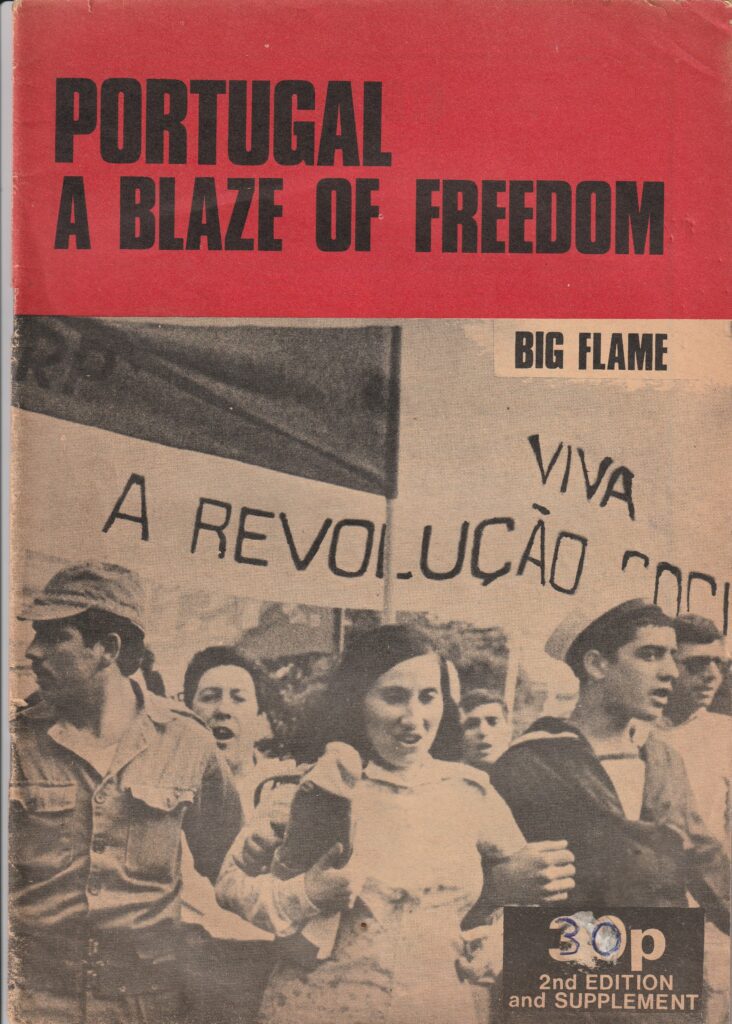
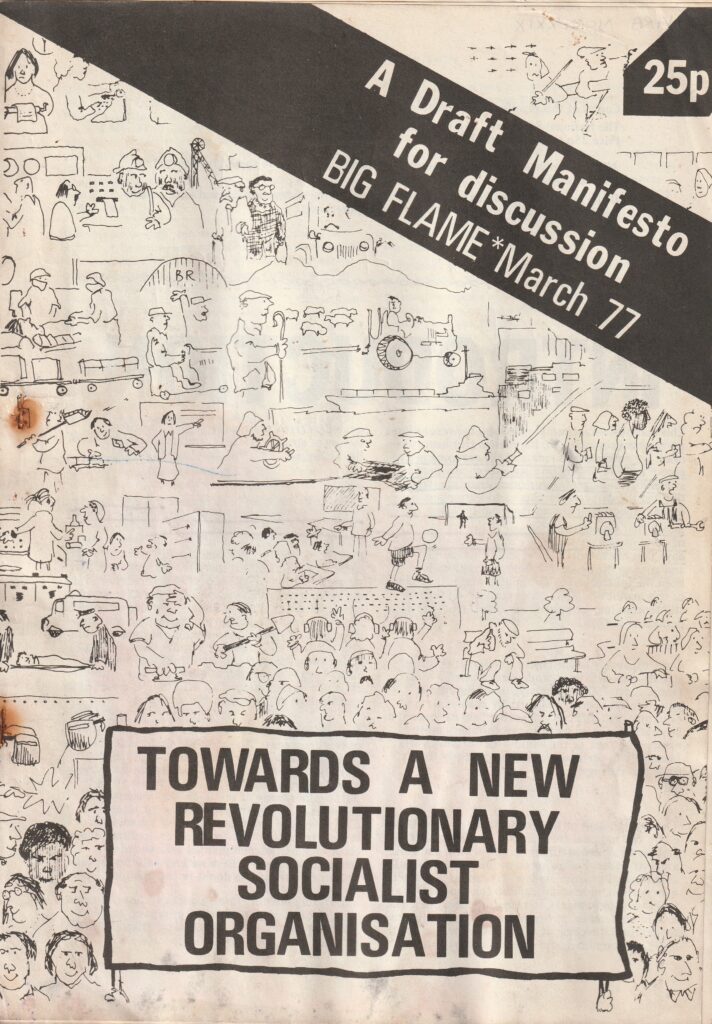
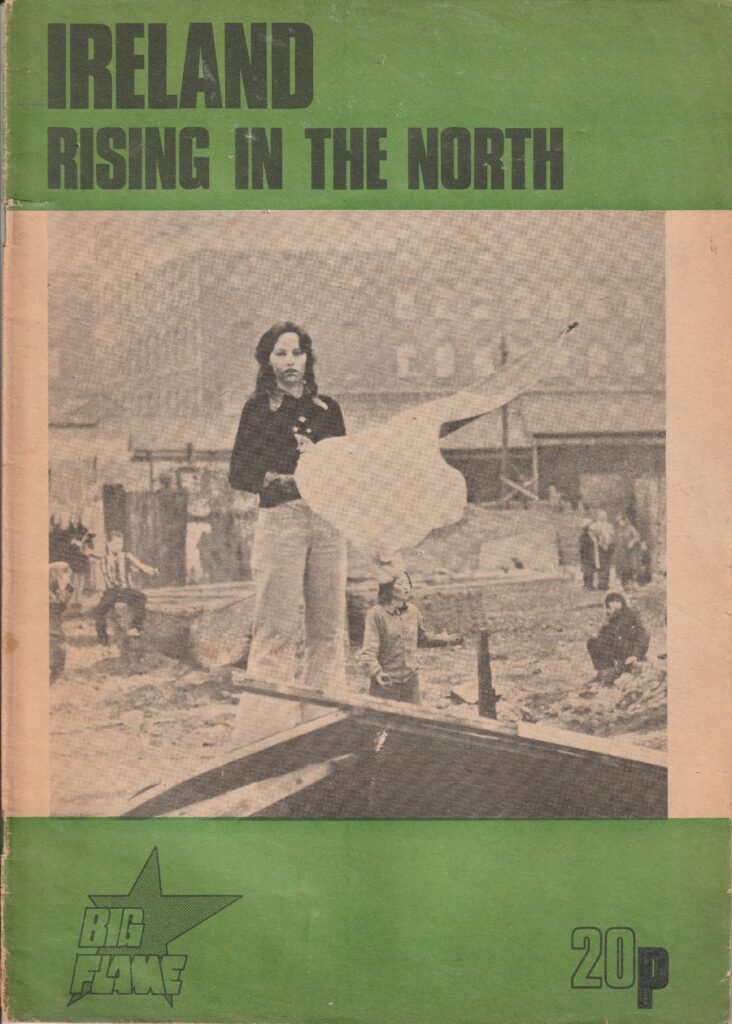
 Given the above, ‘Seizing The Power’ (hereafter mostly STP) seeks to address what is/was undoubtedly a gap in the purist autonomist perspective: how exactly might revolution be made in modern times? As STP points out (p.17) BF had till then implicitly adhered to a ‘big bang’ theory of revolution without exploring such in detail. By default this meant accepting the perceived Leninist template. Strategic thinking was not, in my opinion, a strong point of the dominant autonomist faction, hence the article was not uniformly acclaimed. For instance, in the opinion of Toni Negri, key Italian autonomist theorist–whom BF members under the Red Notes banner rightly supported when he was framed on specious terrorism charges (see BLINDED BY THE LIGHT? POLITICAL TERRORISM IN ITALY)–“far from being defeated, the revolutions of the twentieth century have each pushed forward and transformed the terms of class conflict, posing the conditions of a new political subjectivity, an insurgent multitude against imperial power. The rhythm that the revolutionary movements have established is the beat of a new aetas, a new maturity and metamorphosis of the times” [4]. Putting it politely, this is moonshine, a construct so diffuse as to be evanescent. That the authors of ‘Seizing The Power’ a couple of years later joined the Labour Party (a course of action which they here reject) does not negate the important questions they raise [5], nor should Geoff Hodgson’s drift to an anti-socialist position do so either. Those in favour of the approach advocated by Duncan/McKenzie–hereafter mostly D/M–(the two monikers placed together denote the name of a 1970’s Everton FC flair player loved by us fans but despised and disposed of by manager Gordon Lee) were in a definite minority, and I surmise (but hope it is not so) the perspective below will not be prominent in the forthcoming book to be published by Merlin Press in November 2024 on the organisation. Max Farrar, a long-time BF stalwart from Leeds, is involved with the book and in 2011 mentioned his own involvement in the only substantial previous mention of BF, the National Committee sanctioned 1981 Socialist Register article by John Howell ‘Big Flame: Resituating Socialist Strategy & Organisation’ [6]. Another positive development: in March 2024 the Salford-based working-class movement library received a £100,000 National Lottery grant to digitise and publicise their Big Flame archive [7].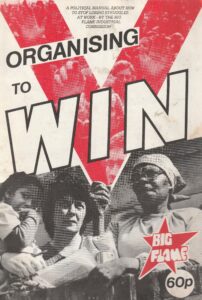
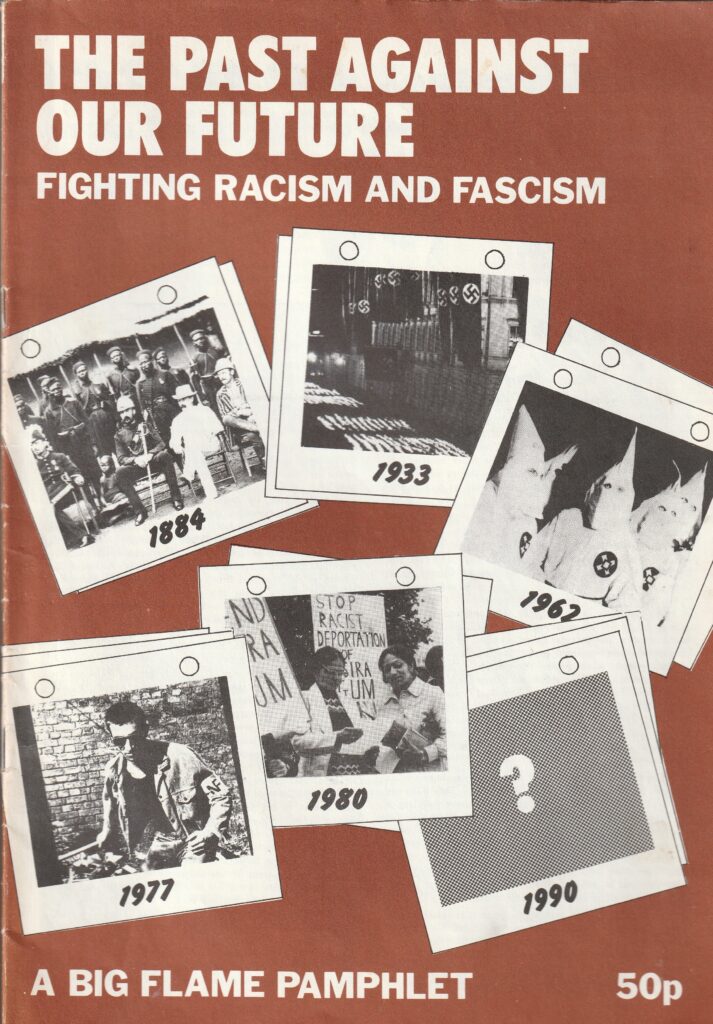 Third microscopic faction I joined (my party name was Micky Mouse) the Emerald Street Group favoured combining both points of view. Once the strategic faction decamped to Labour, debate ended, BF entering a death-spiral.
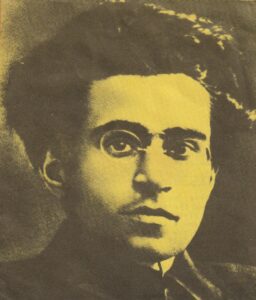
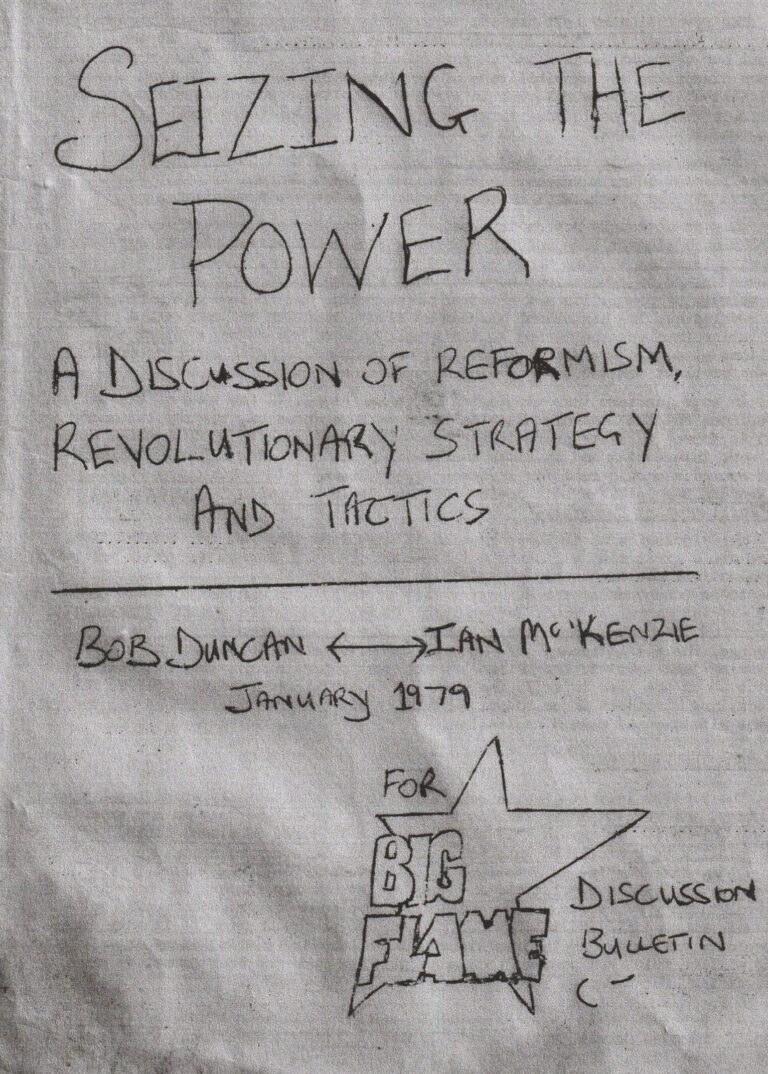
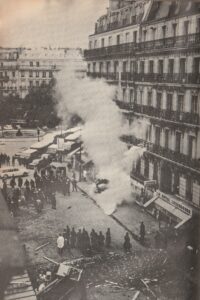
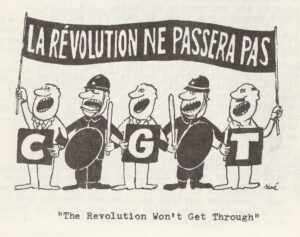
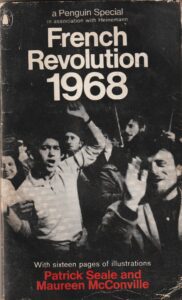
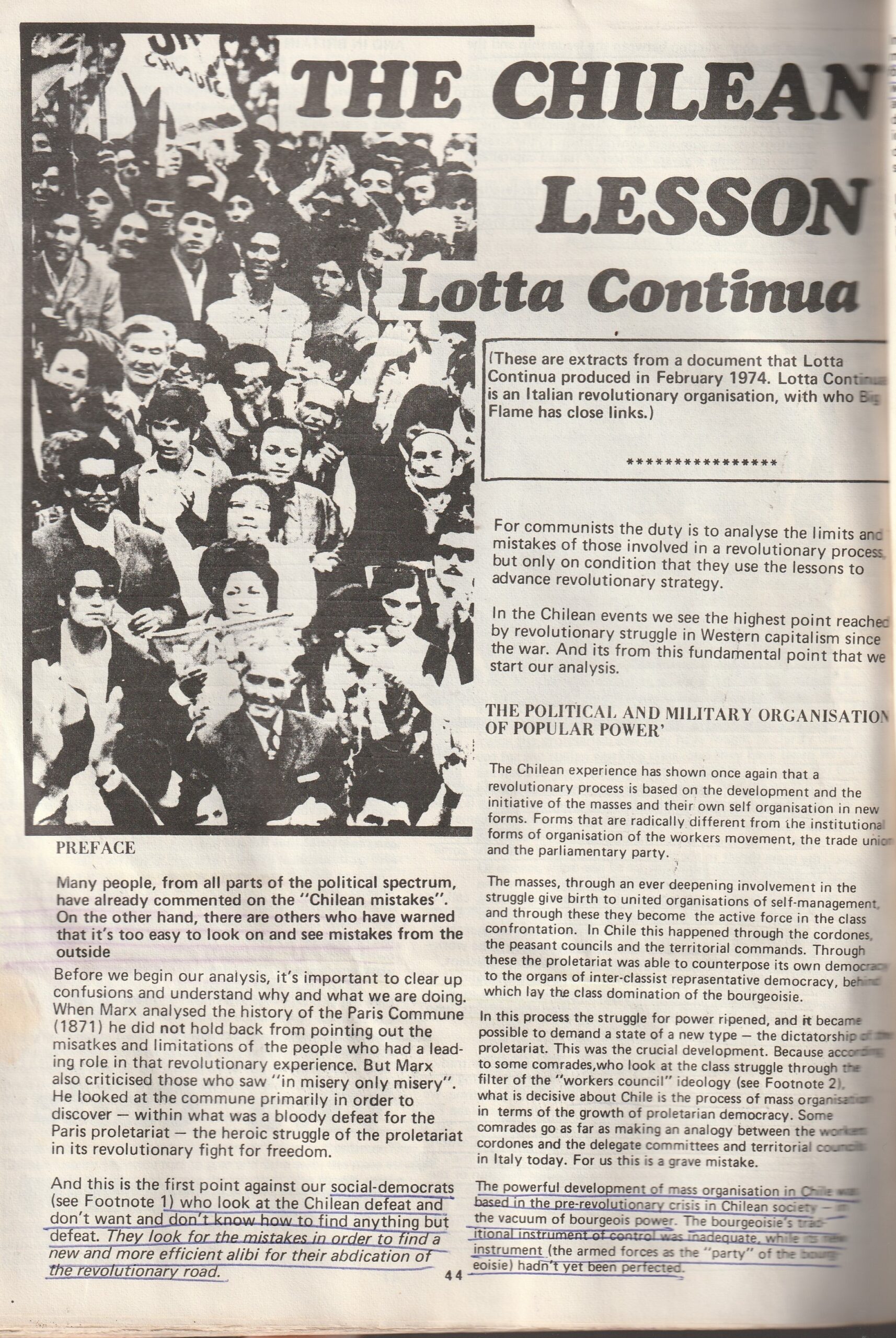
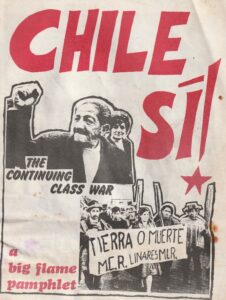
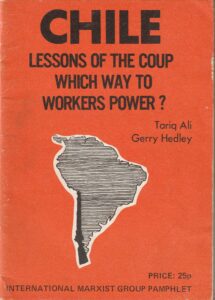
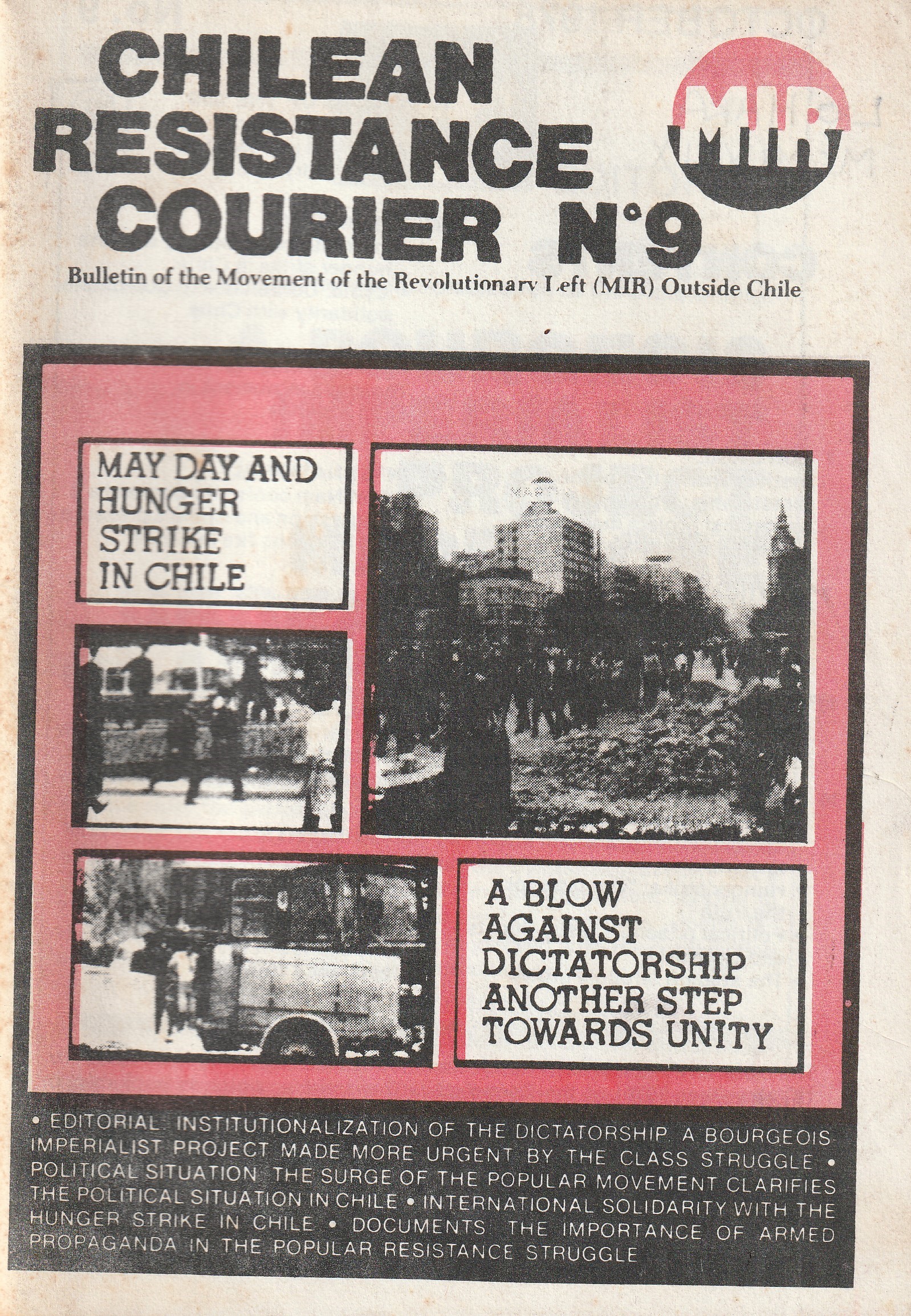
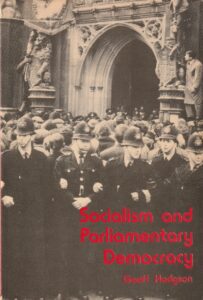
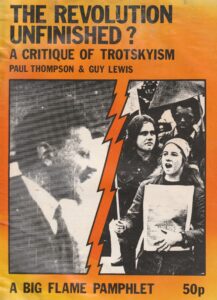 For some comrades these questions might seem a long way off. Yet they are the basis of the debate over Chile that has shaped Euro-communism, and the factors revolutionaries in Italy, France and Spain–amongst others–find it vital to refer to. It is important for us for our own narrower purposes. They make us face up to things we have to think of today. It may seem absurd to perceive of a Left Labour Government (or some variation) from the view of Britain 1979. Yet it is no more absurd in the longer-term than a socialist revolution in boring old Britain. These questions should inform our debate on whether to support the return of a Labour Government: our current position being, we believe, the right starting point, but it raises other vital matters of tactics. For instance what should our attitude be to struggles inside the Labour Party. If we accept the perspective outlined above it is obvious that we must support the struggle of the Labour Left, without in any way reducing class struggle to its dynamic.