
Oliver Eagleton: The Starmer Project Verso 2022 £12.99 Reviewed by Larry O’Hara (published in Labour Briefing July 2022)
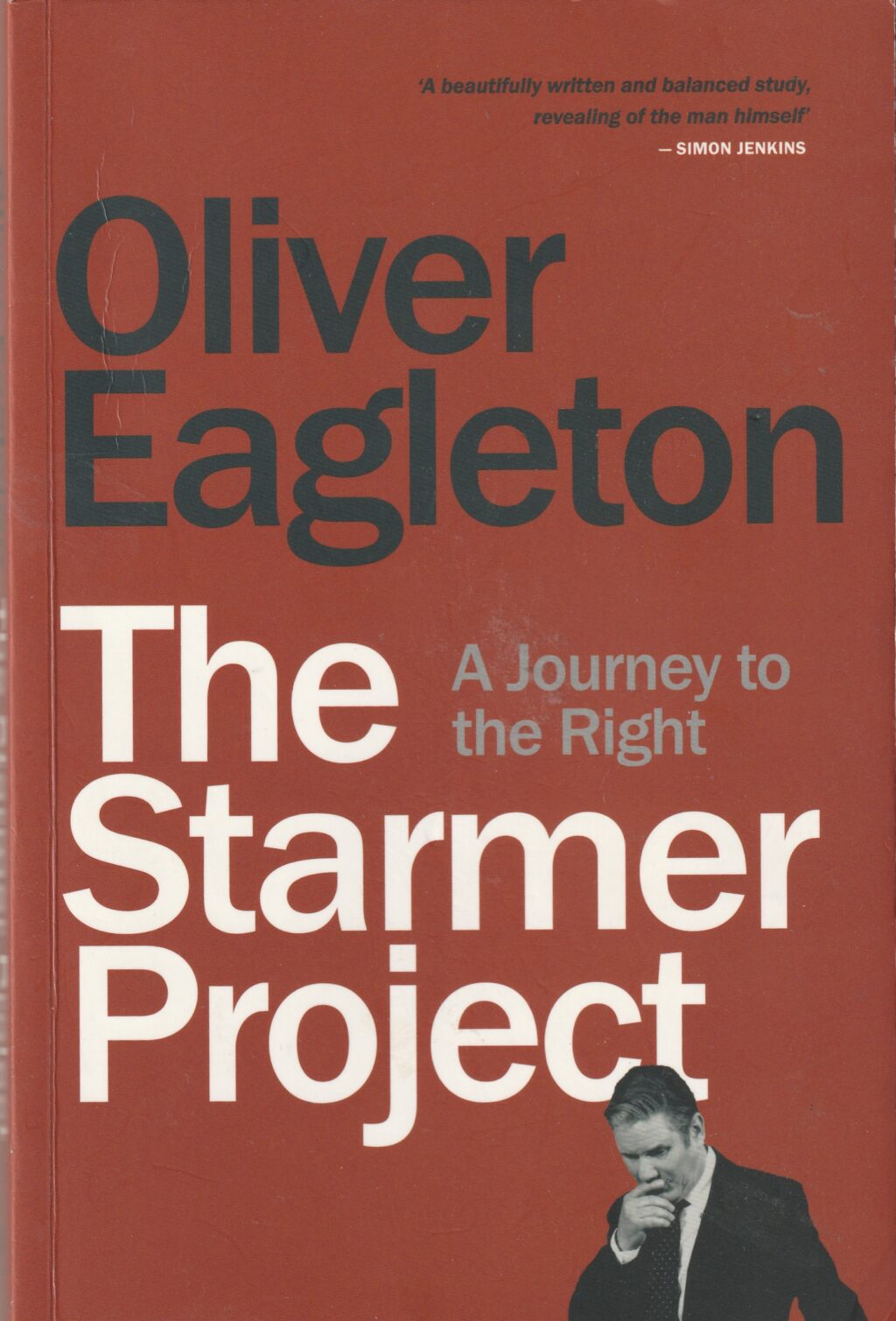
An important and useful book, even if not perfect (what is!). This no mere biography, but a forensic analysis of Keir Starmer’s career, usefully divided into four parts. These are The Lawyer, covering his time up to and including a stint heading up the Crown Prosecution Service (CPS) as Director of Public Prosecutions, The Politician, looking at his parliamentary career up to and including the 2019 General Election. Followed by The Candidate, reviewing his successful campaign to become Leader, and finally The Leader, looking at his style and policies in office.
The first section covering Starmer’s time at the CPS is particularly strong, drawing together various disgraceful episodes he was involved in/covered up, not atoned for by earlier strategically astute pro bono work such has the McLibel Trial. These include Julian Assange’s incarceration, the attempt to extradite autistic hacker Gary McKinnon to the US, the murder of Ian Tomlinson by police, and many more. Particularly shocking was Starmer turning the CPS into an arm of US foreign policy (p.29), one of many instances where Starmer has cosied up to spooks.
The second section chronicles Starmer’s role in sabotaging a possible Left populist Brexit (p.86-120), although Eagleton perhaps underestimates how few Labour members (rightly or wrongly) disagreed with such an approach: so in 2018 Starmer’s allies didn’t need to fill “the room with pro-EU delegates” (p.99). They were there already. An important corrective to the flawed accounts of Owen Jones/Pogrund & Maguire, he reveals the naivety of Corbyn and allies in ever trusting Starmer at all (p.73/96). Controversially, Eagleton casts great aspersions on John McDonnell’s role in EU policy (p.114-118), and McDonnell’s take (and Seumas Milne’s) I would like to hear before accepting such summary judgement, especially from often anonymous sources. Nonetheless, there is enough chapter and verse on Starmer’s repeated duplicity to indicate even Lucrezia Borgia might hesitate before accepting his dinner party invitation.
Section three starts with a (to me) convincing rebuttal of facile Remainer arguments about why Labour lost in 2019, especially the claim Brexit was primarily about xenophobia, refuted by poll data (p.129). Eagleton believes that in contrast to Labour’s confused Brexit policy the “only option was to propose bold policies, like a progressive Leave deal, that could break through negative press coverage” (p.133). Even those who demur might nonetheless agree that many Labour members were beguiled into voting for Starmer by the assumptions that 2019 meant there was no need to challenge Westminster centralism, instead a slick media performer with administrative expertise was the answer (p.134-5). Without overly dwelling on it, Eagleton concisely dismisses the claims of widespread anti-Semitism in Labour (p.151-3).
Starmer’s dishonest role in Jeremy Corbyn’s suspension is outlined in Section four (p.153-65). Eagleton also deftly explains just how the Tories in 2019 moved on to Labour’s 2017 high ground by placing themselves (hypocritically) as representing the People against the Establishment (p.182-3). Eagleton draws the section to a close with a summary of what the Starmer Project stands for, and dispiriting it is too: a ‘values led’ non-antagonistic electoral strategy, crushing the Labour Left, pro-Atlanticist (US/NATO) abroad, authoritarian at home, and neo-liberal economic precepts from exhumed Blairism.
The Afterword controversially addresses what the Left should do now. He is scathing about most Left MPs/the Socialist Campaign Group, reserving especial disdain for John McDonnell (again: p.189) and also “Britain’s sclerotic Trotskyist and Communist grouplets” (p.193)—which presumably includes Counterfire, of which he is a former member. Ouch! Most unfair, not least because Eagleton’s alternative consists of merely listing a (great) number of (laudable) campaigns and civil society groups, then stating “once they have grown into a movement with clear demands and a popular mandate, a level-headed assessment of possible electoral vehicles will be needed” (p.193). It is clear he does not think this would be Labour, but the notion such movements will automatically non-antagonistically coalesce is something I thought unlikely 45 years ago, and is no more likely now.
However, criticism of some aspects does not diminish the fact this book is both important and timely: whether Starmer stays or goes…
About The Author
