
A Review of Tony Benn & Andrew Hood ‘Common Sense: A New Constitution For Britain’ Hutchinson 1993 by Larry O’Hara 20/8/26


Introduction
While not the last Tony Benn book: his massively influential diaries came later, this book (the title a homage to Tom Paine’s 1776 book advocating American independence) is a programmatic final testament. Its purpose was to flesh out the arguments behind Tony Benn’s Commonwealth of Britain Bill, first presented to parliament in 1991. The text of the Bill is printed at the end of the book. The influence of this book, though small, has endured. 25 years after Benn left Parliament is a good time to look again at this text. For one ginger group (Republican Your Party) within (the absurdly named) ‘Your Party’, this book constitutes a political programme, its suggestions current and future political priorities. For both reasons, though primarily final testament status, it is worth examining. This review has six parts: a reminder of Benn’s importance, his view of problems facing the UK, his solutions outlined, the book’s good points, questionable aspects analysed and finally remarks about relevance today. Mention of various Parts/Schedules refers to clauses in the Bill.
- Tony Benn’s importance
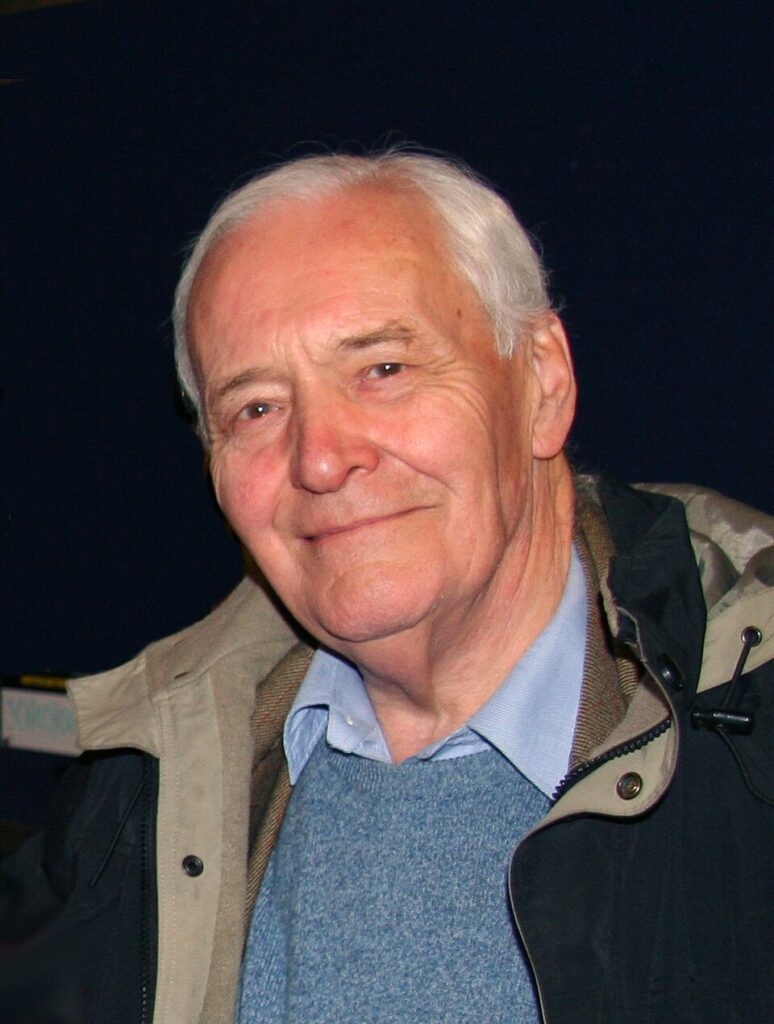
Benn was a major political figure, his career and contribution to the Left immense. But, as I will argue, this book, and Bill, were not his finest hour. Hailing from a Labour political dynasty, he inherited a title, Viscount Stansgate. Under the law then prevailing he was disbarred from his Commons seat and forced to sit in the Lords instead. Benn was not prepared to countenance this, and his indefatigable campaigning between 1960 (when he lost his seat) and 1963 led to the Peerage Act, allowing hereditary peers to renounce a title for their lifetime. Which he did, and returned to the Commons. A junior minister in the 1964-70 Harold Wilson government, Benn enthusiastically supported new technology, reorganised the Post Office, set up the Giro Bank & backed development of the Concorde aircraft. He forcibly denounced Enoch Powell’s 1968 ‘Rivers of Blood’ speech, and after Labour’s 1970 defeat moved sharply to the Left, crucially supporting and popularising the Labour Left’s ‘Alternative Economic Strategy’. Colloquially known as the AES, this was important as one of the few times when the Labour Left clearly set the pace on policy[i]. Benn also became increasingly critical of the UK’s 1972 membership of what was then the European Economic Community: a commonly-held position on the Left at that time[ii].
On Labour’s return to office in 1974, as Industry Minister Benn supported nationalisations and the Lucas Workers famous ‘Alternative Plan’. Defeat of anti-EEC forces in the 1975 Referendum on membership allowed Wilson to demote him to Energy: where Benn supported nuclear power, a position he later dropped. Labour under Callaghan lost the 1979 election to Thatcher, campaigning on a tepid social democratic programme, sharply contrasting with Thatcher’s iconoclastic offering. Subsequently, Benn went on the offensive. I will never forget his stirring speech to the 1979 Labour Conference, listing a whole raft of policies ‘ruled out’ to tumultuous applause. Eloquence, both in political meetings and the Commons, was an important part of Benn’s armoury, as too the way he always placed contemporary struggles in historical perspective. He was a genuinely creative and self-reflective thinker, contrasting sharply for example with his sometime camp-follower and current Your Party ‘parliamentary leader’ Jeremy Corbyn who has never to my knowledge had any original political ideas.

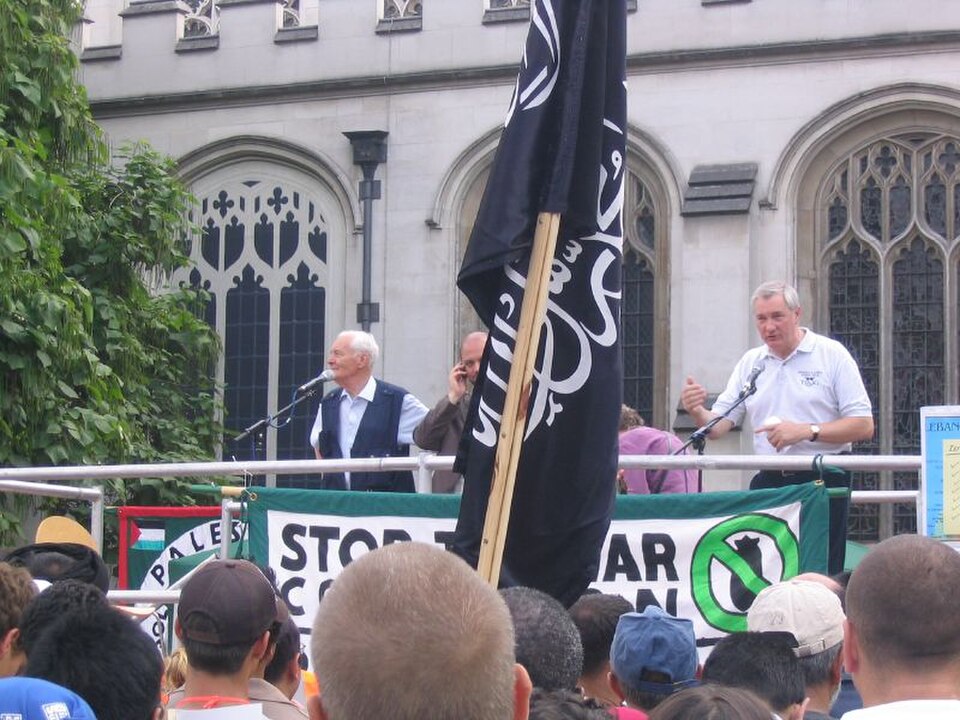
In 1981 Benn stood as Labour Deputy Leader, missing out by less than 1% because the reactionary rabble who later departed to form the SDP stayed long enough to vote for rival Denis Healey. Throughout the 1980’s Benn strenuously campaigned for socialist ideas: two key texts were ‘Arguments For Democracy’ (1981) and ‘Arguments For Socialism’ (1982) and also ‘Fighting Back: Speaking for Socialism in the Eighties’ (1988). Benn remained in parliament till 2001, famously remarking he was leaving “in order to spend more time on politics”. Between 2001 and death in 2014, Benn was true to his word, not least as President of Stop The War Coalition, a resolute opponent of the Iraq and Afghanistan wars.
By any reckoning Tony Benn was a political heavyweight, not to be forgotten despite critical remarks below. Indeed, as I will argue, there are logical explanations for undoubted differences between 1970s/1980’s Benn and the 1990’s version.

2. The problems diagnosed
Straight away a distinction, coursing throughout the book, between ‘first order’ problems, primarily addressed, and those which though overlapping are treated primarily descriptively/without great clarity and not confronted directly.
Regarding first order problems, the Foreword states “it is the core of this argument that Britain should become a republic, replacing the feudal structures inherited from the past with democratic institutions for the future”. The prime feudal structure is the monarchy: the Crown “is both the fountain of all honour and the source of much power and which provides a means for securing the loyalty of bureaucrats, the military and secret services as servants of the nation rather than the people” (p.31). Formally, Common Sense is correct to say “all the rights and duties of the British people stem from the powers of the Crown. The legal authority of the state is the monarch. Thus defendants in court are prosecuted by the Crown and not the people” (p.36). Common Sense accurately states the “royal prerogative has its roots in the oath taken by William the Conqueror” (p.37). However a major error aside–stating King John created our system of government as a baronial court in 1265 when he died in 1216 (p.25)—Benn’s potted history omits highly germane episodes showing limits to monarchical power: for instance the 1327 deposition of Edward II, or Speaker Lenthall’s famous 1642 intervention, addressing Charles I and 400 armed men intent on arresting 5 MPs—“I have neither eyes to see nor tongue to speak in this place but as this House is pleased to direct me”, or that the last monarch to decline Royal Assent to a bill was Queen Anne in 1708 (Scottish Militia Bill) though even that on her ministers advice. While elsewhere Common Sense concedes a monarch was removed by the Commons (Edward VIII in 1937) the role and power of the Crown are subtly exaggerated, deflecting attention from what is admitted concerning prerogative powers, that “whether in possession of the government or monarch, they remain immense in scope and supercede many of the powers of the elected Commons”. Indeed all powers but dissolving Parliament and asking an individual to form a government “are actually exercised by and with the advice of the Prime Minister” (p.37). I am not saying these powers, plus the ability to create or refuse to create House of Lords members to thwart an elected government (something articulated by Edward VII in the 1910 crisis when he demanded a fresh election before considering it) are unimportant. If/when we ever get a genuine Left Government those powers would be significant obstacles, but nonetheless Benn exaggerates the importance of what Walter Bagehot called the dignified part of the constitution (the monarch) and implicitly downplays that of the efficient part (the government) here, which, to be fair, he does not do elsewhere. The ‘permanent state’ (and the PM/government) exercise power using the monarchy as a shield, so Benn does have a point here to some extent.
I concur “civil servants tend to view” themselves as comprising “the real permanent government, regarding their loyalty to a sense of national interest embodied in the Crown” (p.51). As he puts it “the present constitutional arrangements are such that elected governments may not be able to pursue policy on which they are elected and which they believe is in the public interest since they may be obstructed by the guardians of the interests of the Crown” (p.52). True, but the issue highlighted here is not the Crown as such, but again those using it as cover. Benn further argues “it is the nature of political institutions and not the nature of collective provision which has contributed to Britain’s decline; what is needed is a new constitution which allows people to create their own solutions…and removes the power from elites to do things for them” (p.35). Attributing decline to a constitutional form pre-dating modern times is hardly convincing since the same institutions, especially the monarchy, existed during any presumed rise as well as fall. Whether his new constitution would really remove powers from elites is explored later.
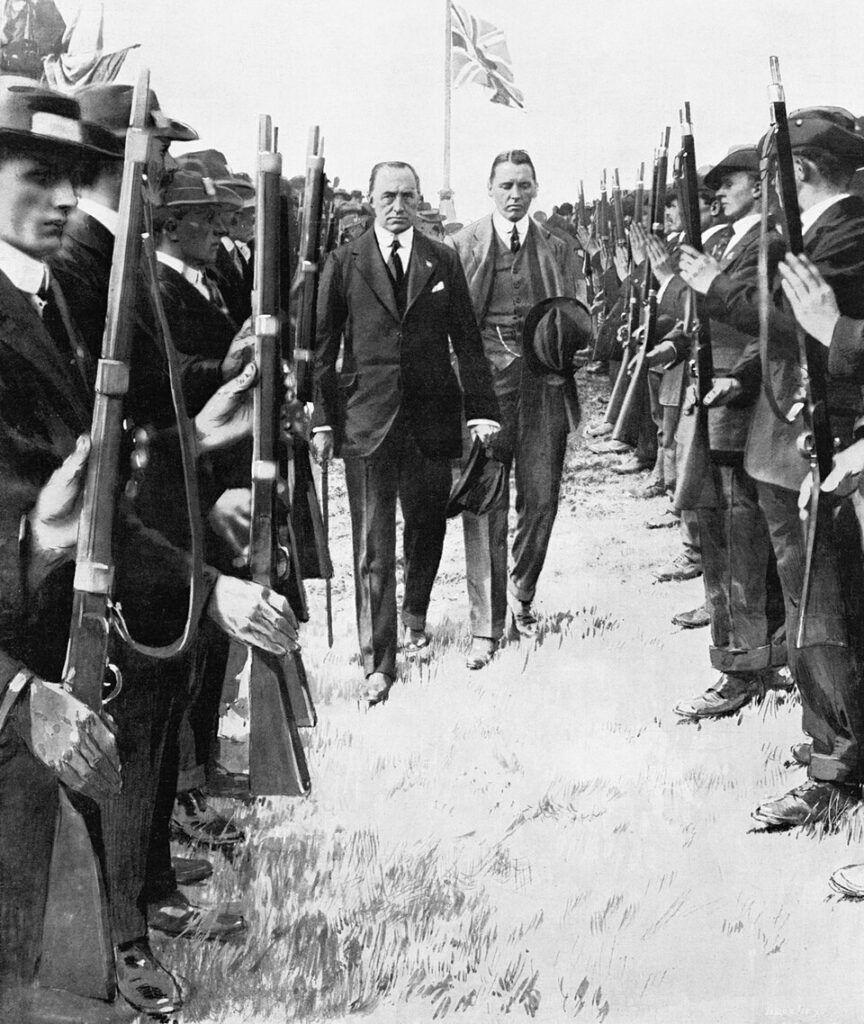
EDWARD CARSON EXAMINING THE UVF IN 1913: AND HARDLY LOOKING FOR CONSENSUS
In fact, the main problem is described differently elsewhere: after recounting main party agreement on policies (p.11-12) we find this—“while the political leaders agree on such wide areas of policy, from NATO, nuclear weapons, and the desirability of a federal Europe, to the dominance of market forces and the necessity for restraining trade unions, there is no real possibility of a serious assault upon the causes of the crisis” (p.13). Also, “in recent times, the opposition parties have come to share many of the policies of the party in power…all parties now agree on membership of the EC, on the role of NATO, on the maintenance of nuclear weapons, on the primacy of free markets and on the continuance of the war in Ireland” (p.55). This matters, because as Common Sense puts it “for an opposition’s attacks to have any force, its alternative programme must have support and in fact the opposition’s desire to be seen as a government-in-waiting can hinder its function as critic of government policy and principle. The outcome is not effective opposition, but effective consensus—a situation not unlike that existing between the Whigs and the Tories 140 years ago” (p.55). While not doubting that at the time of writing Labour shared values with the Tories, that has not always been so: to take just one example, before World War One, under our existing constitution, Liberals and Conservatives were at political daggers drawn: over Ireland, The House of Lords delaying powers and especially the Budget (including pensions etc.). In other words, under our existing constitution ideological conflict between parties can happen therefore it is not the constitution stopping it per se, but the times and instances of ideological consensus. Indeed, it could be argued that the campaign of vilification against Corbyn between 2017-19 and Benn himself in the 70’s and early 80’s was so intense precisely because those defending the status quo well know the constitution can be somewhat malleable.
The nature of our economic system, capitalism, and the class struggle seem for Benn second order problems. While there is a passable description of our economic system (p.80-87) and a critical outline of measures against unions (p.23-4) and some plans address these things, they do so weakly, and not substantially in the actual Commonwealth of Britain text itself. Other ‘second order’ problems not making it into the Bill are reducing the power of senior Civil Servants, genuine Scottish and Welsh self-determination, and fleshing out controls on capital movements.
3. The proposed solutions
The word solutions (plural) is apposite: the instrument through which all the problems, primarily constitutional, are addressed is an all-encompassing ‘Commonwealth of Britain’ Bill. In fact it is merely a list of diverse but not intrinsically connected reforms:
- An end to the monarchy, replaced by an elected President, their palaces expropriated.
- MPs and all public servants swearing an oath of loyalty to the constitution not the Crown
- Withdrawal from the EEC
- A parallel ‘Commonwealth of Europe’ Bill, which essentially makes all relations with what was then the EC voluntary, setting aside the supremacy of European over British Law.
- Reducing the Prime Minister’s power of patronage: many appointments to be ratified by the Commons
- Voting age lowered to 16
- 50% of all MPs to be women (dual member constituencies)
- Elected assemblies for both Scotland and Wales
- Replacing the House of Lords by an elected ‘House of the People: including representation for Scotland & Wales proportionate to their population
- A legal system freely available to all
- Setting up a High Court to replace what was then the Law Lords sitting as the Highest Court of Appeal
- Judges retiring at 60 & only removable by the two elected Houses
- Increased powers for local authorities, especially economically
- A broad array of social and economic rights, guaranteed by a Commissioner: to employment, health care, a clean environment, culture, education, free childcare, dignity in retirement, trade union rights and more.
- Industrial Democracy of a sort
- Disestablishment of the Church of England
- Troops, and the British presence, out of Northern Ireland within two years
- Annual Report by the Security Services, accountable to a Select Committee
- Accountability to the Commons of UK Representatives at the UN
4. Strong points in Benn’s argument/book
Before commenting critically on illogical/questionable aspects, it is worth flagging up areas of real value.
- Highlighting that oaths of loyalty are currently made to the Crown not the people and this should change is powerfully made (p.42-43/108), and (what interests me most) the current oath would be the key ideology of legitimation used by higher echelons of the armed forces/civil service (p.51) to justify sabotaging a Left Government, no doubt about that. The oath as it stands is designed to exclude accountability: unacceptable.
- Benn was also right to consistently, and here too, oppose what is now called the European Union as totally undermining democracy (p.60-72). A thesis not undermined in my view by the Tory version of Brexit that eventually transpired: an argument for another day[iii].
- While controversial, Benn was correct to oppose PR in elections: as he puts it “proportional representation would in practice merely consolidate the unofficial coalition which now exists into a formal one” (p.6-7). He further states, PR is favoured by some who fear that our current system “might lead to the election of a government of a kind that would challenge their privileges, and to some changes that might erode their powers…To undermine the House of Commons by…paralysing it with endless coalitions through proportional representation would be do undo centuries of struggle by the governed against the governors, and thereby inflict a grave defeat upon the very idea of democracy” (p.120). Amen to that.
- He was also on the ball when opposing cross-party constitutional reform groups like Charter 88, as their make-up probably explains why such groups do “not campaign for social and economic rights which might cause friction in [their] alliance” (p.77-78).
- Proposing dual member constituencies with equal gender representation (Part II 9:3) is a bold move with much to commend it. How it relates to trans liberation is something Benn did not have to think about. We would.
- Perhaps drawing on personal experience (though not mentioned) Benn usefully summarises the extensive powers Prime Ministers have to both make policy and sideline dissident Cabinet members (p.45-50). Though to be fair he had covered this subject far more extensively in his ‘Arguments For Democracy’ (p.18-43). The salience of this critique has been confirmed by the subsequent ‘sofa government’ under Blair (so no official records), and government by vanishing WhatsApp messages (Johnson and later McSweeney). That said, there is a contradiction about the way Benn presents Prime Ministerial power explored below.
- Drawing attention to the pivotal role of the Privy Council, from which back-bench MPs are excluded, as a mechanism for confidentially implicating opposition leaders in government policy, especially regarding armed conflict (p.56-7). Again though, politics not the constitutional niceties/form should be the prime focus. Thus, during the 1956 Suez Crisis, Labour opposition Leader Hugh Gaitskell used confidential Privy Council briefings to publicly denounce Tory PM Anthony Eden as the liar he was.
- That we have a state church, the Church of England, is anomalous, so Disestablishment is eminently sensible (p.4/108).
- Complete British withdrawal from Northern Ireland within two years (p.48-9/Part XII). While this would upset Ulster Protestants, worth remembering the last All Ireland election in 1918 saw 85% of votes cast for a united independent Ireland. It was only Protestant refusal, backed by the Lloyd George government, to accept the popular verdict that led to the creation of Northern Ireland in the first place.
- The suggestion prior consent from the Commons is needed before basing foreign military forces in the UK, and their use in any conflict abroad, and furthermore annual treaty renewal for all this (Part Va 23:1/2) is clearly aimed at US bases, and rightly so.
5. Problems with Benn’s argument/book
You might be forgiven for thinking, a few quibbles aside, given there is much to like in the book/Commonwealth of Britain Bill, why not endorse it as the basis for a Left Programme? Quite a few reasons. The crux of the matter is many of Benn’s measures are in Common Sense and the Commonwealth of Britain Bill severed from what made Benn such an inspirational figure previously. Notably the S word, socialism, does not feature in the book at all. All very well criticising Charter 88 for being a cross-party lowest common denominator consensus campaign, but Benn not anchoring his proposals within a socialist project as previously fatally dilutes their potentially transformational effect. There is also the question of agency: numerous reforms in Common Sense had long been argued for by Benn, but as integral parts of such a transformational project. Along with no mention of socialism another omission, just as important: no specific role for political parties, especially significant as Benn remained in the Labour Party till his death. An absence personal, strategic: and crucial.
Put simply, while Benn undoubtedly still believed in socialism in the abstract, by the time he wrote Common Sense definitely seems to have no longer believed it was/is possible in our time. Thus though some socialistic measures (kind of) are secreted within the Bill/Common Sense, they are detached from any realistic party-political project. This can easily be ascertained by contrasting the measures, and attitude, in Common Sense with what Benn articulated previously. Two key texts illustrate this, both dating from 1982: his interviews with New Left Review[iv] and Benn’s own article ‘Power, Parliament And The People’, originally published in New Socialist, reprinted in the 1988 book ‘Fighting Back’[v]. 1982 was important: despite him narrowly losing the Deputy Leadership in 1981, Labour nonetheless had a broadly Leftist set of policies (Programme 1982), and the 1983 Election defeat had yet to happen. In 1982 Benn said this “Labour ministers may gain office from time to time, but Labour will never be in power, and socialism will never be achieved however many electors vote for it. It is against this background that the reforms we need can best be understood. They all involve practical action early in the life of the government , for which explicit endorsement should be sought in the manifesto”[vi]. So there you have it: multiple reforms, yes, but in the context of an explicitly socialist strategy, not divorced from it.

Looking at aspects in turn:
a) Common Sense is contradictory on exactly how political change occurs. Thus, “if popular will is strong enough, important choices can still be made which will allow people to improve the conditions of their lives. But they can only be made if the institutions of government are compelled to respond to democratic pressures” (p.30). Agreed: but in this case a written constitution is no help but might be a hindrance. Elsewhere we read (despite all the powers alluded to on p.45-50) that “it would be political suicide for a Prime Minister, however critical of scandal in the City of London, to oppose the right of the City and its international financial allies to use the power of financial speculation to determine the value of the currency. To do so would be to challenge the IMF and the world bankers. And no PM, however bedevilled by the excesses of the security services, would dare to question their arrogant claim to determine which groups are acceptable and which subversive” (p.9). This is not the 1982 Benn speaking, but the 1993 version: and of course because he does not specify affiliation, we are entitled to presume he means even a Labour PM. Another passage does refer to a Labour PM, making a debatable point that if he (or she) is isolated from the party as “the source of democratic authority the PM will be open to extra-Parliamentary action from powerful interest groups and elites, not the least of which are the City, big business, the European Community, the civil service, the military, the media, and in the case of a Labour government, the unions” (p.74). The point is debatable because those pressures will be/are there with or without ‘democratic authority’.
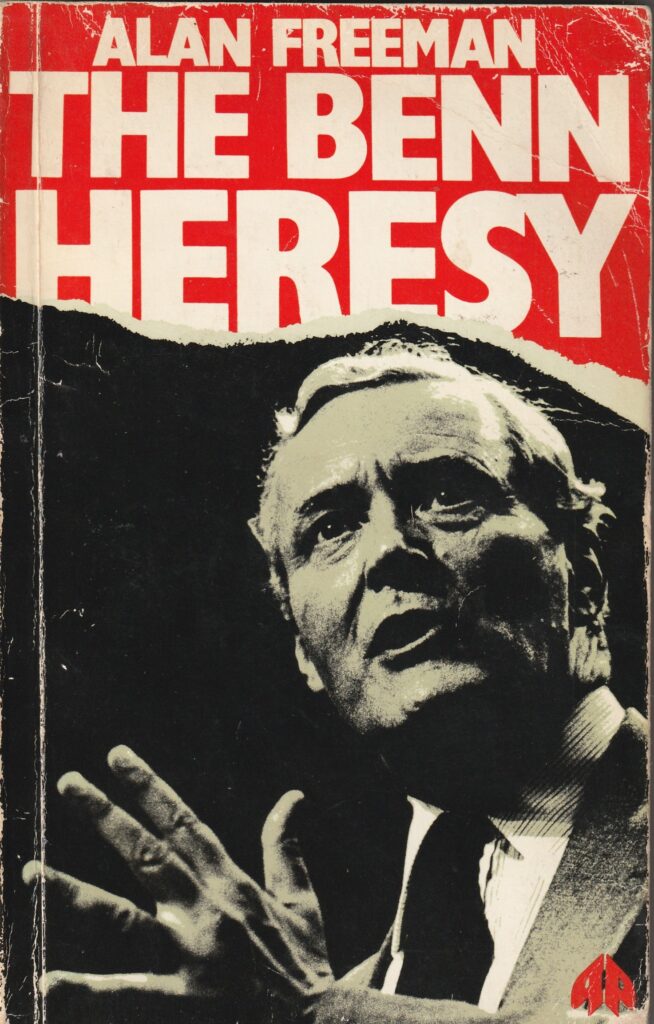
b) In a related issue, 1982 Benn makes a salient point as true in 1993 and 2026 as 1982: “we must not deceive ourselves into thinking that our opponents will accept fundamental change provided it is carried through democratically. They will not. Their interest lies in preserving the power and wealth that they have against all attempts to change it”[vii]. If opponents would not accept fundamental change in 1982, it behoves those who think they might now or in the near future (i.e. adopting the Commonwealth of Britain Bill as the basis for a programme) to explain how and why circumstances have changed. They have not changed except for the worse (e.g. massive privatisation of utilities, the immense political power of tech behemoth tax-dodgers like X eBay and Amazon), which has far-reaching strategic implications. Benn’s idea that after a Referendum the Constitution will be changed, the very fact of such a Referendum “acting as the ultimate safeguard against any seizure of power or coup, because the courts would be required to abide by the new constitution” (p.112) is touching, but misplaced. In a way, not surprising because Benn never was a revolutionary, as his candid interview with Trotskyist Alan Freeman underlined[viii]. As it happens, Common Sense earlier anticipates this eventuality but does not resolve it, stating “it is governments and the courts which implement rights and there must be some method for ensuring they are held accountable to the people whom their power affects. If they are not, then there is no guarantee that rights which have formally been recognised will be effective or respected in practice” (p.30). Quite.
c) Central to Common Sense is listing numerous citizen ‘rights’—political, legal, economic and social, ranging from employment to education the environment and much else besides (p.93-96). All have resource implications, which Benn seems aware of, conceding “provision of these rights all the time would not be possible” (p.95). His solution is moonshine: “a Commissioner for Human Rights would…cover the Charter of Rights and bring abuses or refusal of rights to the attention of Parliament” (p.95). This would not only transmute political issues into legal ones, but, leaving the workload question aside, would not this be the same Parliament that may have decided not to prioritise the rights in question? Hardly helpful. Drilling down into some of these rights raises more questions than answers: for example who defines ‘useful work’? what exactly is ‘proper housing’’? does ‘good health care’ include access to all medications no matter how expensive, and what exactly might a “media free from governmental and commercial domination” (p.94) look like? Would it mean the end of DA notices designed to keep stories under wraps for ‘national security’ reasons? And so on: lots of work for lawyers one surmises. But is that the route we want society to take, following the US example of turning political issues into legal ones?
d) It gets worse: who could credibly believe that the “Charter of Rights makes the leap from the ballot box–which gives legitimacy to the political system–to the consent of the people for the economic system, and it must inevitably lead to a change in that system” (p.96). Not only is there nothing ‘inevitable’ about it, giving the impression there might be is grossly politically irresponsible, as the ghost of Salvador Allende might point out if summoned. While tempting to compare this touching faith in the ballot box to King Canute trying to turn back the tide, the difference is Canute knew it wouldn’t work but was just making a point.
e) Turning to the legal system, Common Sense displays a touching faith in the integrity of the most senior judges (then termed Law Lords) stating that what will become the “High Court shall initially be composed of such persons as are Law Lords and members of the Judicial Committee of the Privy Council at the coming into force of this Act” (Part VII 24:2). Rather conflicting with Part VII 25:2 stipulating retirement at 60. As sure as day follows night, the judges would do their utmost to block radical measures, including their own retirement, not least because the Bill would make their removal (by vote of both Houses of Parliament) more difficult than now (Part VII 25:3). Setting up a National Legal Service giving “each person the right, free of charge to be represented in Court on matters of direct personal or family concern” (Part VII 28) would most likely produce social change so profound Shakespeare’s words in Henry VI Part 2—”Let’s kill all the Lawyers” might need updating to “Let’s all train as Lawyers”…
f) The Commonwealth of Britain Bill treatment of intelligence agencies is mixed. Always a troublesome issue for Benn: in 1982 the best he could offer was urging an incoming Labour government to “appoint somebody to be in charge of them with a clear brief: to protect security as defined by legislation. You would prohibit the use of the security services for dealing with dissent”[ix]. Common Sense evasively states “that there is a role for the security services is itself an issue for the people to decide” (p.60). While he does say “people should know, after the event, on what grounds phones have been tapped, on whose authority individuals have been placed under surveillance or had their homes searched, which foreign governments have been undermined, which supported and why” (p.60), this is small beer: indeed the 1985 Interception of Communications Act (since superceded by the 2016 Investigatory Powers Act) already covered that in 1993. Unless of course Benn means individuals being informed after the event: creating yet another payday for lawyers and providing precious information to Organised Crime Groups. The clause (Schedule 3) in the Commonwealth of Britain Bill for an annual report to parliament by the minister having oversight is even weaker than what we have now (The Intelligence & Security Committee). That Committee is so useless it has never got to the bottom of, or even tried to, the British State’s ‘dirty war’ in Northern Ireland. Nor did they have a clue before it came out independently via Edward Snowden in 2013, that the US National Security had access to vast amounts of surveillance material on UK citizens.
While Common Sense was being written, MI5 were engaged in a major campaign to enlarge their remit and powers, having displaced Special Branch as the lead anti-IRA agency in 1992. The whole topic of contemporary MI5 empire-building I wrote about at the time[x]. That “the security services would be made accountable to the Commons and subject to an annual report and renewal of their powers” (p.105) has come to pass, there is some nominal oversight as noted: also annual threat assessments albeit of debatable quality[xi], though not yet any annual renewal of powers. Stipulating that the “head of each security service shall be nominated by the Government and confirmed by the Select Committee of the House of Commons” (Part V 20:4) is certainly interesting, though such measures have hardly avoided malfeasance in the USA for example. A very recent leak of correspondence between MI5 Directors General shows just how easily spooks find it to bamboozle ministers, something this confirmation process would be unlikely to change[xii].
g) Next weakness/grey area concerns industrial democracy. We read that “industrial democracy would go some way to restoring the balance of power in the workplace” (p.88). What balance of power, restoring to what/when exactly? Apparently, “people should be free to decide for themselves how to organise their workplace, their local community and the national economy for the country as a whole…the Commonwealth of Britain Bill would go some way towards building this broader concept of democracy and citizenship, re-establishing the control of democracy over the productive forces in a way which could allow people to have the economy work for them and their needs” (p.89). While in many ways laudable, these sentiments are just mush: what about the capitalist class and their allies opposing this? And since when did democracy ever control the productive forces in a capitalist society? Turning to Schedule 1:5 apart from trade union membership and a ‘fair wage’ (fair to who?) the actual industrial democracy specified is pathetic and not democracy at all: merely “to participate in all decisions, including those relating to health and safety, affecting the workplace and to information, representation and expression of opinion for all employed persons”. And that’s it: no expropriation, no workers control, no wealth tax: indeed the measures in the Bill are the norm in enlightened capitalist enterprises anyway.
h) Related to the pitiful Commonwealth of Britain Bill pretence of introducing industrial democracy Common Sense states “there is no reason why flows of capital should not be managed in the same way as flows of people….Rules over ownership of capital, like ownership of a car, should limit its detrimental use in society. Constraints on capital could make its use accountable to the needs of society rather than to the desire for profit” (p.88). Signal fact though: even these sentiments, vague as they are, do not make it into the Commonwealth of Britain Bill text. Even worse is the statement that “extending democratic accountability over capital might start with the removal of its control over the workplace” (p.88)—which means the laughable industrial democracy just looked at is the first line of attack, nothing else mooted: and as we shall see there were/are plenty of other possible measures, not contemplated here. Benn does not seem to understand how capitalism works. He argues “the nature of the economic system should be a matter for public choice, and free market capitalism should not be accepted without any discussion of the rich variety of alternatives” (p.78). Yet this is no ‘debating matter’ in the style of the Commons or Oxford Union: it’s a struggle between contending classes.
i) Turning to different areas of the UK, the Commonwealth of Britain Bill adopts a decidedly ‘Brit Left’ attitude: advocating three national parliaments for England Scotland and Wales, enjoying “legislative and administrative power, subject only to the overriding interest of the Commonwealth in matters common to the three countries that would comprise it in respect of defence, foreign policy and the control of the currency” (p.97). Continuing English domination is exercised in the following way: the ‘Commonwealth Parliament’ is to consist of the House of Commons and the House of the People: the former majority English as now and maybe exclusively English as per the call for three national parliaments, without mention of a fourth. Though this is not spelt out when it really should be, either way. The House of the People, replacing the Lords, would undoubtedly be English-dominated as it “shall be elected in such a way as to represent England, Scotland and Wales in proportion to their populations” (Part II 10:1). For reference, in 2024 population numbers were England 58 million, Scotland 8.5 million, Wales 3.2 million. To avoid any semblance of doubt, where Commonwealth Parliament legislation conflicts “with any enactments of the national Parliaments, the Commonwealth legislation shall have precedence” (Part VIII 33). In his early 1980’s incarnation Benn waxed lyrical about how England is a colony, not really accepting (except rhetorically: p.98) that Wales has been one since the statute of Rhuddlan in 1284 (did you really think Edward I built all those castles as tourist attractions?) and Scotland since the shameful 1707 Act of Union. Benn’s claim that the “Bill recognises the equal claim of Wales to self-government” (p.98) is just not true.
j) The relationship between the two Houses: the Commons and ‘House of the People’ (hereafter HOP) is fraught with potential pitfalls. Certainly, the HOP can delay legislation for a year, as now, but given they would both be elected at what looks like the same time, it isn’t clear logically why the Commons (which may as discussed be purely English) should have a democratic mandate considered superior to the HOP’s. To avoid such conflicts other legislatures (e.g. France and the US) have staggered elections/different terms of office.
k) While elections every four years is unexceptional, the rigidity of saying should it be impossible to cobble together a new government if one falls there “shall be a general election to elect a new Parliament for the unexpired term of a previous Parliament” (Part V 17:4) verges on the nonsensical and will make one problem afflicting politics even worse: government short-termism.
l) A deficiency far more serious is the fantastic range of powers the Commonwealth of Britain Bill recommends giving to an elected President. These not only include ones previously exercised by the monarch (dissolving parliament/assenting to legislation/inviting a person to form an administration) but a truly frightening new array: declaring war, ordering British forces into armed conflict, signing treaties, granting pardons, making appointments and exercising “other executive powers not conferred by statute”—frankly as sinister as it sounds (Part III 14:c). Now, the President is elected, but this is no direct democratic election, rather by a two-thirds majority from both Houses of Parliament, where candidates are to be drawn from. This will inevitably, and is clearly intended to, weaken the influence not just of Prime Ministers, but political parties too. When the book was written, the highest % of seats obtained in a General Election since 1945 had been the Tories 397 (out of 650) seats in 1983: still 25 short of a two-thirds majority. While the 1997 Blair government got 418 seats (out of 659), even that did not surpass the 431 needed for a two-thirds majority. None of this takes account of a HOP figure, including Scotland and Wales, of course. It matters little that the President would only be in power for one (and possibly two) three-year terms. He or she would not be beholden to the PM, indeed this system (not least their legislative rather than popular electoral base) further bakes in future conflict with this little vignette: the President “shall act solely upon the advice of the Prime Minister, or of a resolution of the House of Commons (which shall prevail if such resolution is in conflict with the advice of the Prime Minister)” (Part III 14:1a). The set up positively encourages the President to engage in cross-party intrigues involving both Houses, as if they want to win a second term those are the electoral constituencies they need to placate/impress. It is astonishing somebody as knowledgeable as Benn should produce such a flawed Presidential system, which unquestionably would undermine the mandate of any elected government, and thus, factually speaking, parliamentary democracy itself.
m) A possible clue as to why Common Sense favours a Presidential model can perhaps be found in Benn’s seeming admiration for the US Constitution compared to ours (p.3). Speaking about Europe, but it clearly shows the mind-set, it is stated “a democratic federation, comparable to the USA, with its House of Representatives, Senate and President and Vice-President elected by the population could not be faulted on democratic grounds”, and further “the United States is committed by its constitution to the principles of ‘life liberty and the pursuit of happiness” (p.113). I beg to differ: not only was the US Constitution originally designed to frustrate the popular will (by having potentially antagonistic overlapping centres of power built in) the recent actions of Trump and his ICE Goon Squads/Musk’s Doge/by-passing Congressional oversight to illegally wage war against Iran etc show that the US Constitution and its provisions are not worth the gold foil lined toilet paper they are written on. As for liberty and the pursuit of happiness: tell that to people denied Medicare or given 25-year jail terms for moving a box of radical magazines, or those residents illegally abducted and sent to camps etc. No way is the US an example to follow. The US Constitution did not as such cause a monster like Trump: but their panoply of checks and balances sure hasn’t stopped him.
n) As implicit throughout much of this critique, the main problem with Common Sense/the Commonwealth of Britain Bill is that radical reforms have now been separated from a broader socialist transformational project. It was not always thus for Benn: hence in 1981 for example “there is no prospect whatever for further advance in the interests of working people, either by strengthening the trade unions, expanding democracy or extending the public services within the present economic system…There is therefore, no alternative for us but to attempt a conscious policy of transformation to work out how to achieve it and to win support for it”[xiii]. In other words, the key task was replacing capitalism, for which democratic changes alone (or first) are no substitute. To facilitate this, a key agency, probably the principal one, was the Labour Party. As he put it in 1982 “I see our job…as being to use the statute book to allow [a] bubbling up of socialism from underneath to take place. I see a Labour House of Commons in this sense as the liberator unlocking the cells in which people live. If you do that, you find you have actually enabled the creation of socialism from below”[xiv].
The dilution of Benn’s earlier socialist project that the Commonwealth of Britain Bill constitutes isn’t an abstract phenomenon. Concrete measures either vanished (not an exhaustive list), or missing that you might reasonably have expected to see >>
- Earlier iterations were anchored around the Labour Left’s ‘Alternative Economic Strategy’—while it undoubtedly needed updating (still does!) to simply include aspirational targets like a ‘fair wage’, free legal aid etc without saying where resources might come from is pie in the sky politics, just not serious. To the objection you wouldn’t put such things in a written constitution my reply: another reason why we don’t need one.
- Common Sense vaguely speculates about constraints on capital, but in 1982 Benn was precise: “exchange controls…democratic control of pension funds…public ownership of banking is an essential ingredient of a viable policy….having a minister in charge of the Bank of England…which might be given powers of acquisition comparable to those originally devised for the National Enterprise Board”[xv]. Though not enough, far more than/in the Commonwealth of Britain Bill.
- No mention either of nationalisations (other than Royal Palaces) or anything resembling a wealth tax.
- In 1982 “the election of the Cabinet when Labour is in office is the next logical step in the process of accountability”[xvi]. A step by 1993 presumably deemed no longer necessary. Why?
- Also in 1982, Benn declared the “power to appoint permanent secretaries to all departments…should also be modified by permitting ministers to approve their own Civil Service heads or have the power to secure their transfer. This would do more to establish democratic control of the Civil Service than any other reform”[xvii]. Worth dwelling on this point: despite Common Sense waxing lyrical (p.50-54), as indeed Benn had in 1981[xviii], about the unaccountable power of senior Civil Servants, there is absolutely nothing in the Commonwealth of Britain Bill addressing this issue. I again ask, if such an important purely democratic reform in 1982, why had it fallen down the memory-hole by 1993?
- Speaking of ministerial departments, in 1982 Benn favoured the eminently sensible idea of perhaps 10 Labour MPs to “constitute the ‘cabinet’ for each elected minister to work with in each department”[xix]. Down the memory-hole too, but like the appointment/transfer of permanent secretaries, a clearly democratic reform.
- Another good idea down the memory-hole: that “trade unions should be invited to second staff to act as liaison officers in the private offices of all ministers”[xx].
- If not all, most of the above omissions can be simply explained: by 1993 for all intents and purposes Benn had given up on the 1982 project when “all our efforts must go into defending our interests now and preparing for the day when we can secure them more fully by the election of a reforming socialist government”[xxi].
6. Is the Commonwealth of Britain Bill relevant today?
An answer to this question has first to take account of the circumstances in which the Commonwealth of Britain Bill came about. According to Benn’s biographer Jad Adams, it was the result of 4- or 5-years work, after the historian Peter Hennessy had suggested Benn combine his various bills into one[xxii]. In other words not conceived as a totalising programme, much less a transitional one, but an extended shopping list. That said, the timing, given the Commonwealth of Britain Bill was first laid before Parliament in 1991, and assuming Benn started putting it together in about 1986/87 is explicable. The late 1980s were not a good time to be on the Labour Left or indeed the Left generally. The 1984-5 Miner’s Strike was a major defeat, and the Greater London Council, home to Left populist chameleon Ken Livngstone[xxiii], was abolished in March 1986. There were setbacks for Benn personally too. May 1985 saw publication of a keynote New Socialist article by Patrick Seyd provocatively titled ‘Bennism Without Benn: Realignment on the Labour Left’[xxiv]. This recounted how former allies such as Frances Morrell, Stuart Holland and Ken Coates were now prepared to work with, rather than against, then Labour Leader Neil Kinnock. Seyd himself went on to write an interesting book on the subject[xxv].

An even more humiliating blow was the fact that when Benn stood against flatulent windbag Kinnock in the 1988 Labour Leadership elections, he only got 11.4% of the votes to Kinnock’s 88.6%, and even among ordinary members, Kinnock trounced Benn 4:1. Hardly surprising that around this time Benn very likely came to the conclusion socialism was not on the agenda, and the fact that aged 74 in 1989 he was diagnosed with leukemia, even though the prognosis was uncertain (he lived another 24 years) must surely have encouraged somebody historically aware like Benn to think about his legacy. It is in this context: pessimism about the prospects for (as opposed to belief in) socialism that the Commonwealth of Britain Bill, especially in the deracinated areas of economic policy, can best be understood.
Probably a good idea to dispense with any simplistic view the Commonwealth of Britain Bill shows Benn had moved to the Right or some such nonsense. After all, arguing for equal gender representation in parliament, swift withdrawal from Northern Ireland, and raising the issue of consent to US military bases: these are radical policies. Furthermore, there is one issue where Benn moved markedly to the Left: the monarchy. Asked in 1982 did he favour abolishing the monarchy, his answer was evasive: “if you are thinking as I am, constitutionally and politically, about how we can develop a system that really does serve our democratic purposes, there’s a lot to be said for confining yourself to those aspects of power, patronage and influence that we have been discussing here”[xxvi]. Massive fudge, quite different from the Commonwealth of Britain Bill. Rather than Benn moving to the Right, it may have been former allies deserting to the Kinnock camp that precipitated Benn jumping down the Constitutional reform rabbit-hole without the ‘Drink Me’ potion of a socialist project.
Significant aspects of the Commonwealth of Britain Bill have been rendered outdated by events. Nowhere more so than the UK’s status in relation to the EU. A major Benn cause, for many years, this issue was centre-stage in Common Sense, evidenced by the parallel ‘Commonwealth of Europe Bill’ which neutralised EU influence and repatriated powers granted to Brussels and the Treaty of Rome too. Common Sense (p.112-17) explores the issue, which appears early, when Benn argues the place of Britain within the European “Community is now undiscussable because the City of London and the industrial organisations are determined to uphold the power of a supranational structure over the rights of the ballot box in Britain to threaten their supremacy” (p.9). The absolutism of that passage has not aged well. Other elements of the Commonwealth of Britain Bill now enacted include a Scottish Assembly: created 1998, live 12/5/99, a Welsh Assembly (the Senedd) also live May 1999. The monarchy has since 1993 paid at least some income tax, however insufficient: Charles III paid £12.9 million in tax year 2024-25. Starting with the House of Lords Act in November 1999, hundreds of hereditary peers were booted out, the final relics cleared out this April when the Hereditary Peers Act 2026 became live. We have also, since 2009, had a separate Supreme Court, replacing the Lords as the highest Appeal Court. None of this surprising, nor was Benn wrong to argue for such things back in the day: but these changes have evidently not undermined capitalism, nor were they intended to. Yet replacing capitalism with socialism was Benn’s project before the Commonwealth of Britain Bill.
Any idea Common Sense/the Commonwealth of Britain Bill could provide the basis for a socialist programme today is misplaced, and politically dangerous. The notion you can use a written constitution to smuggle diluted socialistic ideas under the radar is so fanciful I cannot see Benn himself believing it. Virtually nobody else bought into it: despite three attempts the Bill never got a Second Reading. In a typical outcome, on 1/7/96 a total of 9 MPs signed the Early Day Motion supporting it. Both the book and Bill are a veritable potpourri: good policies, not so useful ideas, vague sentiments, along with policies now law. The idea is politically dangerous because if such profound constitutional changes as the Bill contains were enacted, the population would very reasonably expect this to radically improve their lives. Yet for many reasons, not least the utter absence of any credible economic programme, this would not happen. Indeed, not only would any hypothetical referendum campaign be most likely dominated by the monarchical aspect, socialistic aspects of the Bill, however weak, would also be a focus. Yet without a vibrant mass socialist party to make those arguments for in any case a flawed economic offer, the campaign would not go well. Though it is rather unfair to judge this hodgepodge as a realistic governmental programme: it never was nor ever could be,
Further, and this a paradoxical irony, by the Commonwealth of Britain Bill weakening the role of parties, even with our current electoral system, the likelihood of institutional paralysis and underhand political chicanery involving both the President and members of both the Commons and the House of the People would be high. In this way, democracy even of the limited parliamentary kind would be discredited in spades. Former Labour PM Harold Wilson got on with the Queen in part because he said she was the only person he met professionally who didn’t want his job: I venture to suggest any hypothetical meetings between a future PM and President would be far more highly-charged, not least because most Presidents would easily convince themselves they could do better. You only have to look at the antics of Speaker Hoyle, Zionist supporter of genocide who dare not let the public see his own fawning emails to the perpetrators[xxvii], to see how high such popinjays sit in their own estimation. And this creep has only been elected as Speaker in one House, with far less powers than a future President. Thanks but no thanks.
To conclude, if a different question is posed: is there anything useful in the Commonwealth of Britain Bill, the answer is yes. Not as standalone policies but part of an overall socialist transformation, rather than a substitute for it, which is what the Bill actually is. Tony Benn was always cognisant of history, and the best way to remember him is not focussing on the 1993 Benn, but the 1982 version, broadened, updated, and supplemented. La Lotta Continua!
[i] There is a vast array of sources on this. To start see the crucial Stuart Holland ‘The Socialist Challenge’ Quartet 1975, Conference of Socialist Economists London Working Group/Labour Coordinating Committee ‘The Alternative Economic Strategy: A Labour Movement Response to the Economic Crisis’ CSE Books 1980, also Tony Benn ‘Parliament, People & Power’ Verso 1982. For a Trotskyist take (including important interview with Tony Benn) Alan Freeman ‘The Benn Heresy’ Pluto 1982. A critique from Labour Left group Militant was Andrew Glyn ‘Capitalist Crisis: Tribune’s Alternative Strategy or Socialist Plan’ 1979
[ii] See Andy Mullen ‘The British Left’s Great Debate on Europe’ Continuum 2008
[iii] THE GREEN LEFT CASE FOR BREXIT – Notes From The Borderland
[iv] Tony Benn ‘Parliament People & Power’ Verso 1982
[v] New Socialist September/October 1982 p.9-15, reprinted in ‘Fighting Back: Speaking Out For Socialism In The Eighties’ Hutchinson 1988 p.246-54
[vi] ‘Fighting Back’ p.250
[vii] ‘Fighting Back p.249
[viii] See Alan Freeman ‘The Benn Heresy’ Pluto 1982
[ix] Tony Benn interviewed by Reg Race London Labour Briefing 48 22/9/87 p.3
[x] ‘Turning Up The Heat: MI5 After the Cold War’ Phoenix Press 1994, still available. See here: TURNING UP THE HEAT – Notes From The Borderland
[xi] Hidden In Plain Sight: a critique of MI5 Director General Ken McCallum’s threat update 8/10/24: by Notes From the Borderland magazine 12/10/24 – Notes From The Borderland
[xii] MI5 directors who plotted IRGC ‘terror’ ban exposed in leaked emails The Grayzone/Kit Klarenberg 1/8/26
[xiii] Tony Benn ‘Arguments For Democracy’ Penguin 1981 p.217/18
[xiv] Tony Benn ‘Parliament People & Power’ Verso 1982 p.70
[xv] Tony Benn ‘Parliament People & Power’ Verso 1982 p.80
[xvi] Fighting Back p.252
[xvii] Fighting Back p.252-3
[xviii] Tony Benn ‘Arguments For Democracy’ Penguin 1981 p.44-67
[xix] Fighting Back p.253
[xx] Fighting Back p.254
[xxi] Fighting Back p.254
[xxii] Jad Adams ‘Tony Benn A Biography’ Biteback 2011 p.451
[xxiii] See Harry Ainsworth ‘Livingstone, His Politics & The Secret State’ Notes From the Borderland issue 3 2000 p.55-58
[xxiv] New Socialist 27 May 1985 p.5-10/46
[xxv] Patrick Seyd ‘The Rise & Fall of The Labour Left’ McMillan 1987
[xxvi] Tony Benn ‘Parliament People & Power’ Verso 1982 p.48
[xxvii] Speaker doubles down over refusal to disclose Israel emails declassifieduk.org 7/8/25 (Martin Williams)
About The Author
